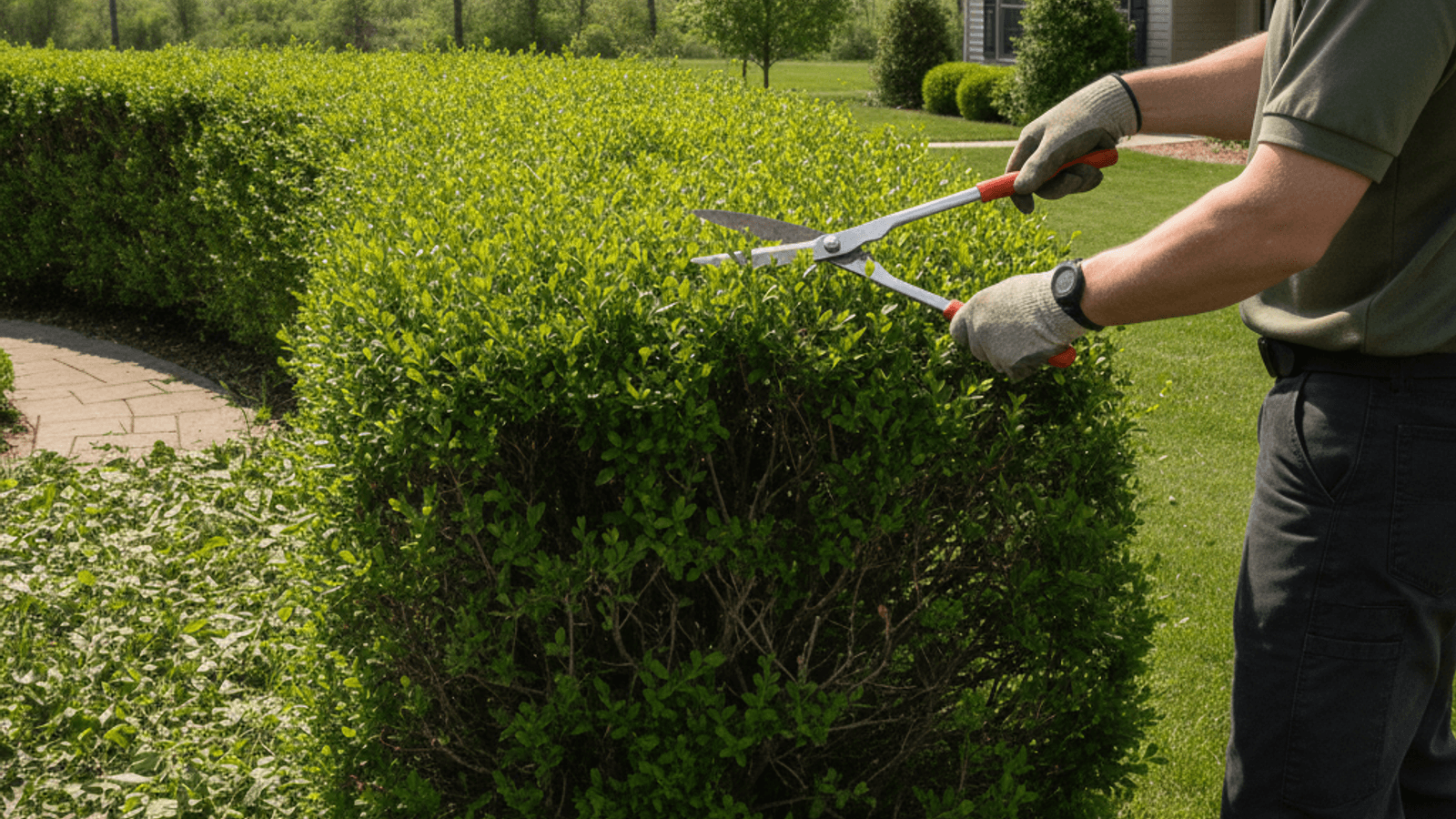
Hedge trimming in Topeka starts with identifying the plant and its growth pattern. The right timing depends on the species, whether it flowers, its condition, and the amount of material being removed. Shape matters too, especially when lower branches need enough light to remain full.
Why timing matters for hedges in Greater Topeka
Timing should follow the plant rather than a single Topeka calendar. K-State guidance says deciduous trees are generally pruned before bud break, from late February through April. Dead, broken, or hazardous limbs may require a different response.
That general window doesn’t apply to every hedge. Evergreens and flowering shrubs have different timing needs, so identify the species before making a substantial cut. Its current condition, flowering cycle, and intended shape also belong in the decision.
The right window for hedge trimming in Kansas
There isn’t one correct trimming window for every Topeka hedge. For a deciduous plant grown as a hedge, begin with K-State’s general pre-bud-break guidance. Then check whether the species flowers or needs a different pruning schedule.
Before reducing an overgrown hedge, ask a provider to assess the species, live growth, dead or damaged branches, and the desired finished size. A written plan should distinguish routine shaping from substantial corrective pruning. That avoids applying a maintenance schedule to a plant that needs a different approach.
How to actually trim a hedge right
A hedge isn’t a tree, and trimming it isn’t the same as tree trimming. Hedges need a different approach because the goal is density and shape, not structure and branch removal.
First, shape the hedge slightly narrower at the top than at the bottom. This is called the A-frame or sloped profile, and it matters because it means every part of the hedge gets some sunlight, including the lower branches. A hedge that’s trimmed flat on top or wider at the top will shade out the lower branches. In a few seasons, you’ll have a green top and bare legs. You’re creating your own hedge failure.
Use sharp shears. Dull shears tear the branch ends instead of cutting cleanly, and torn branches are open wounds where disease moves in. A clean cut closes faster and leaves a healthier plant. For smaller hedges, hand shears work fine and give you better control. For larger hedges or long rows, power hedgers are faster, but they’re also less forgiving. One careless pass with a power hedger can take out way more than you intended.
Avoid removing a large amount without first checking how that species responds to old-wood cuts. Some plants produce new growth from older stems, while others may leave lasting bare areas. An overgrown hedge may need staged work, but the sequence should follow its species and condition.
For selective pruning, place cuts according to the plant’s branching pattern and the intended direction of growth. If the hedge has extensive dieback or needs major reduction, ask a qualified provider to define the work before cutting.
Species-specific timing for Greater Topeka hedges
Species identification comes before scheduling. A flowering shrub may need different timing from a deciduous foliage hedge, and an evergreen may respond differently to cuts into older growth. Don’t apply a generic deciduous-tree calendar to every plant.
Ask when the hedge flowers, whether it produces new growth from old stems, and how much reduction is planned. Those details help a provider recommend an appropriate trimming window without treating every Greater Topeka hedge the same.
When to call in a professional for your hedge
An overgrown formal hedge or a plant with extensive dieback may benefit from a professional tree health assessment before trimming. Similar symptoms can have different causes, so thinning or dead branches don’t establish a diagnosis by themselves.
Topeka Tree Pro can connect you with an independent insured provider. Ask the provider to examine the plant, soil, drainage, moisture, light, and intended result before recommending trimming or other work.
Once you’ve got your hedge on a good trimming schedule, regular maintenance trims in the right window keep the work manageable. Small regular cuts are easier and less stressful to the plant than occasional heavy cuts.
Hedge maintenance after trimming
Check soil moisture and drainage after trimming instead of watering on a fixed schedule. K-State notes that both excessive and insufficient water can cause plant problems. Conditions at the site should guide what the hedge needs.
Don’t assume fertilizer will correct slow growth, thinning, or discoloration. Those symptoms can have several causes. Ask a qualified provider to assess the plant and site before adding a treatment.
Frequently asked questions
What’s the best time for hedge trimming in Topeka?
It depends on the plant. K-State generally places deciduous-tree pruning before bud break, from late February through April, but flowering shrubs and evergreens need species-specific timing.
Can I trim a hedge before spring growth starts?
Sometimes. Pre-bud-break pruning may suit a deciduous plant, but it isn’t a universal hedge rule. Identify the species and consider its flowering cycle before making substantial cuts.
How often should I trim a hedge?
Trim according to its growth, species, desired shape, and condition. Ask a provider to separate light maintenance from corrective pruning when comparing a proposed schedule.
Can a hedge recover from being cut back hard?
Recovery depends on the species, remaining live growth, and site conditions. Some plants respond poorly when cuts extend into older wood, so an assessment is sensible before a major reduction.
If your hedge is overgrown or thinning, call Topeka Tree Pro at (785) 333-4052. The referral service can connect you with an independent insured provider who can inspect the hedge and provide a written estimate.