Tree cabling and bracing across Greater Topeka
Tree cabling and bracing may be considered when an inspection finds a weak union, split, or other structural concern in a tree worth preserving. Topeka Tree Pro connects Greater Topeka homeowners with independent insured providers who assess the tree, site conditions, nearby targets, and intended outcome before discussing support or removal.
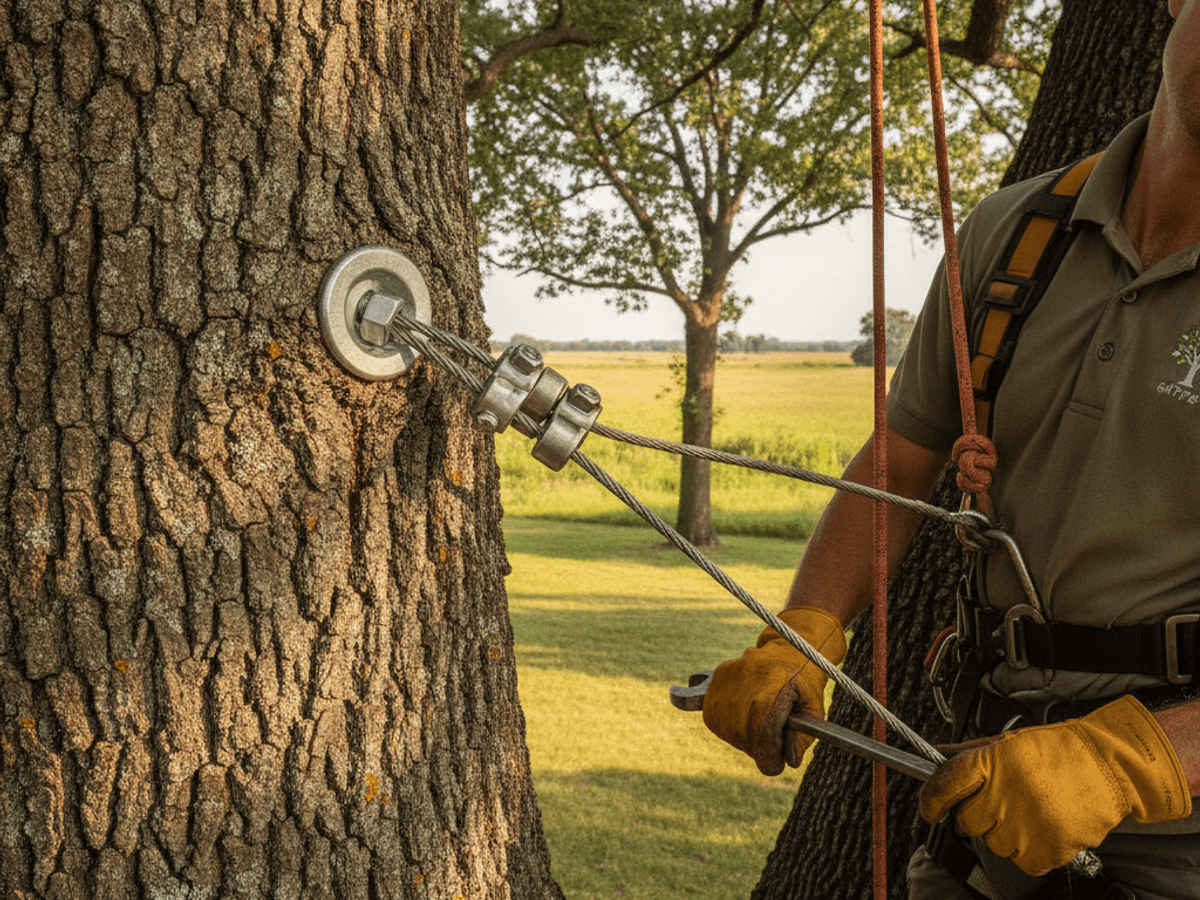
What does Tree Cabling and Bracing include?
- Connect you with a provider who can assess codominant stems, weak unions, cracks, and support options
- Review whether a provider recommends cabling for the tree's observed structural condition
- Review whether a provider recommends bracing for an inspected crack or split
- Compare structural support with removal when an inspection finds severe damage or instability
- Consider the tree's actual condition, site, nearby targets, and preservation goals
- Request an inspection of existing support hardware after visible storm damage or a change in the tree
When do you need this service?
- A mature tree has a visible crack, split, or weak union
- A provider finds a structural concern where two large stems share a union
- You want to preserve a large, high-value tree rather than remove it
- A tree survived storm damage but shows structural weakness
- Ice loading left visible cracking, splitting, movement, or other structural damage
Frequently asked questions
Can a split bur oak actually be saved with cabling?
Possibly, but only an on-site assessment can determine whether support is appropriate. The provider should inspect the split, surrounding structure, tree condition, site, and nearby targets. Cabling or bracing may be discussed when support is suitable, while severe damage may require removal.
How long does a cabling or bracing system last?
It depends on the system, tree growth and condition, site loads, and the provider's maintenance plan. Ask for an inspection schedule in writing. Request another assessment after visible damage, hardware movement, or a significant storm.
Does tree species determine whether cabling or bracing is appropriate?
Species can inform an assessment, but it does not decide the answer by itself. A provider should inspect the actual union, cracks, canopy structure, tree condition, site conditions, and nearby targets before recommending cabling, bracing, pruning, or removal.
Should cabling be done before or after ice storm season?
Have a known weak union assessed before severe weather when practical. If ice has already caused cracking, splitting, hanging branches, or instability, stay clear and request professional assessment before discussing cabling, bracing, pruning, or removal.
Does cabling help with wind resistance during tornado season too, or just ice?
It may be considered for a specific weak union exposed to wind or ice loads, but it does not make the tree storm-proof. A provider should inspect the tree and site, explain the proposed system's limits, and discuss whether support, pruning, or removal fits the observed condition.
Where can homeowners request Tree Cabling and Bracing in Greater Topeka?
We connect homeowners across Greater Topeka with independent insured providers, subject to provider availability. Choose your city, request an estimate, and confirm the written scope directly with the matched provider.
See tree cabling and bracing in all 31 cities
Tree Cabling and Bracing: helpful guides
Structural support decisions
Need tree cabling and bracing in Greater Topeka?
Call to request an estimate and confirm current availability and any estimate or visit fees with the matched provider.