Emerald ash borer treatment across Greater Topeka
Emerald ash borer treatment starts with confirming what is affecting the actual tree. Topeka Tree Pro connects Greater Topeka homeowners with independent insured providers who can assess visible changes, site conditions, and the tree’s overall condition before discussing treatment, monitoring, or removal.
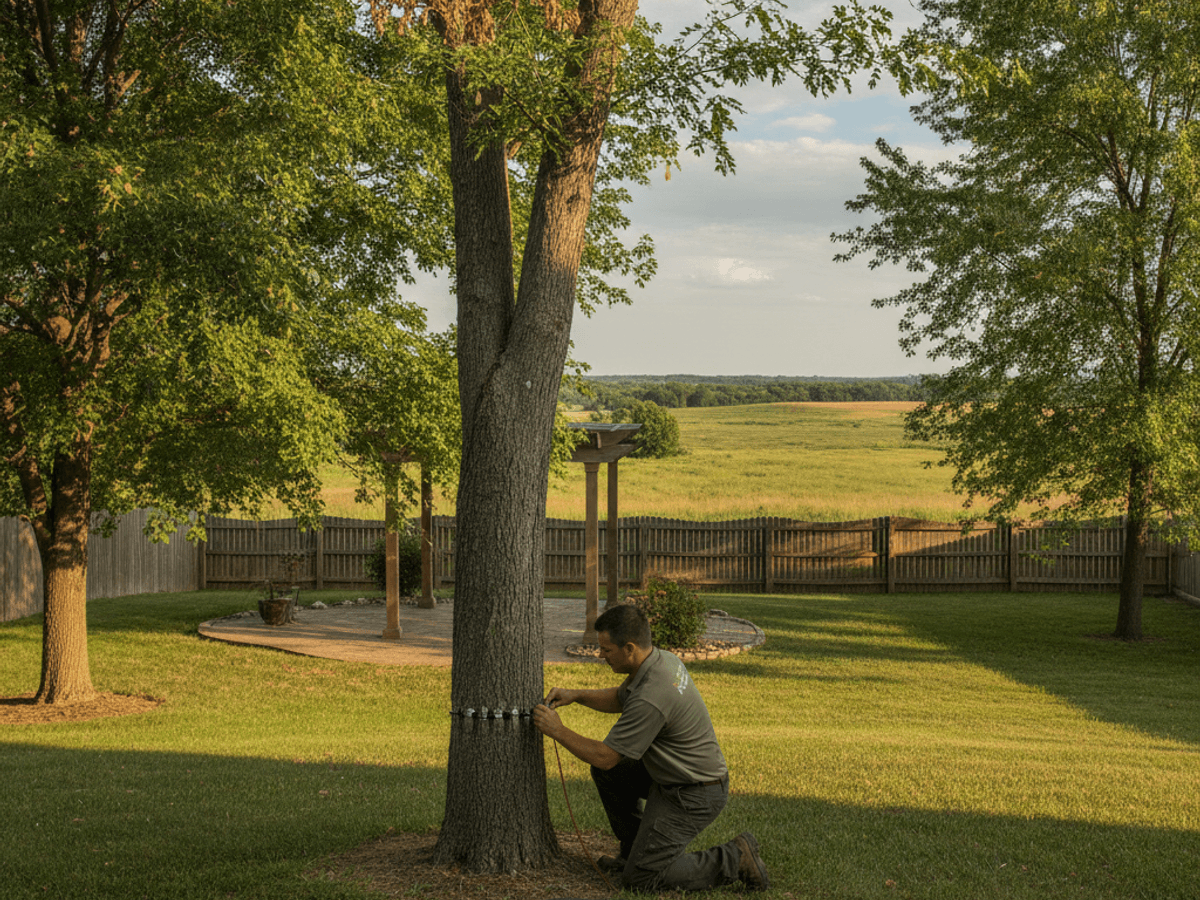
What does Emerald Ash Borer Treatment include?
- Connect with a provider who can assess suspected emerald ash borer activity and other possible causes.
- Ask a provider to explain whether treatment is appropriate for the tree’s documented condition.
- Discuss removal when the provider’s assessment identifies condition or safety concerns that affect available options.
- Request separate written scope details for removal, hauling, and stump work when those services are considered.
- Ask which qualifications apply to the proposed treatment and verify them with the relevant authority.
- Ask whether follow-up assessment is appropriate and request the recommended schedule in writing.
When do you need this service?
- You have an ash tree and want it checked proactively
- A tree is showing canopy thinning or dieback and you are not sure why
- You notice unexplained changes in the canopy, bark, or branches.
- You want your tree assessed rather than relying on pest reports from nearby properties.
- You're deciding whether a specific ash tree is worth treating long-term
Frequently asked questions
Does a nearby emerald ash borer report confirm that my tree is affected?
No. A nearby report does not confirm what is affecting your tree. Ask a provider to examine the actual tree and consider other possible causes before recommending treatment, monitoring, or removal.
Is it worth treating an ash tree instead of removing it?
It depends on the tree’s actual condition, site factors, your intended outcome, and the options a qualified provider can support. Ask for the findings, proposed approach, follow-up needs, and removal alternative in writing before deciding.
Does treating an ash tree require a special license in Kansas?
Requirements can depend on the proposed product and work. Ask the provider which credential applies, request its details, and verify them with the Kansas Department of Agriculture or other relevant authority before treatment begins.
How can I tell if an ash tree is too far gone to treat?
You cannot determine that reliably from a fixed canopy threshold. A provider should assess the tree’s actual condition, structural concerns, site factors, and intended outcome before explaining whether treatment, monitoring, or removal is appropriate.
How often does a treated ash tree need re-treatment?
The follow-up schedule depends on the proposed treatment and the provider’s assessment. Ask for the product information, recommended schedule, monitoring plan, and applicable qualifications in writing before approving the work.
Where can homeowners request Emerald Ash Borer Treatment in Greater Topeka?
We connect homeowners across Greater Topeka with independent insured providers, subject to provider availability. Choose your city, request an estimate, and confirm the written scope directly with the matched provider.
See emerald ash borer treatment in all 31 cities
Emerald Ash Borer Treatment: helpful guides
Need emerald ash borer treatment in Greater Topeka?
Call to request an estimate and confirm current availability and any estimate or visit fees with the matched provider.