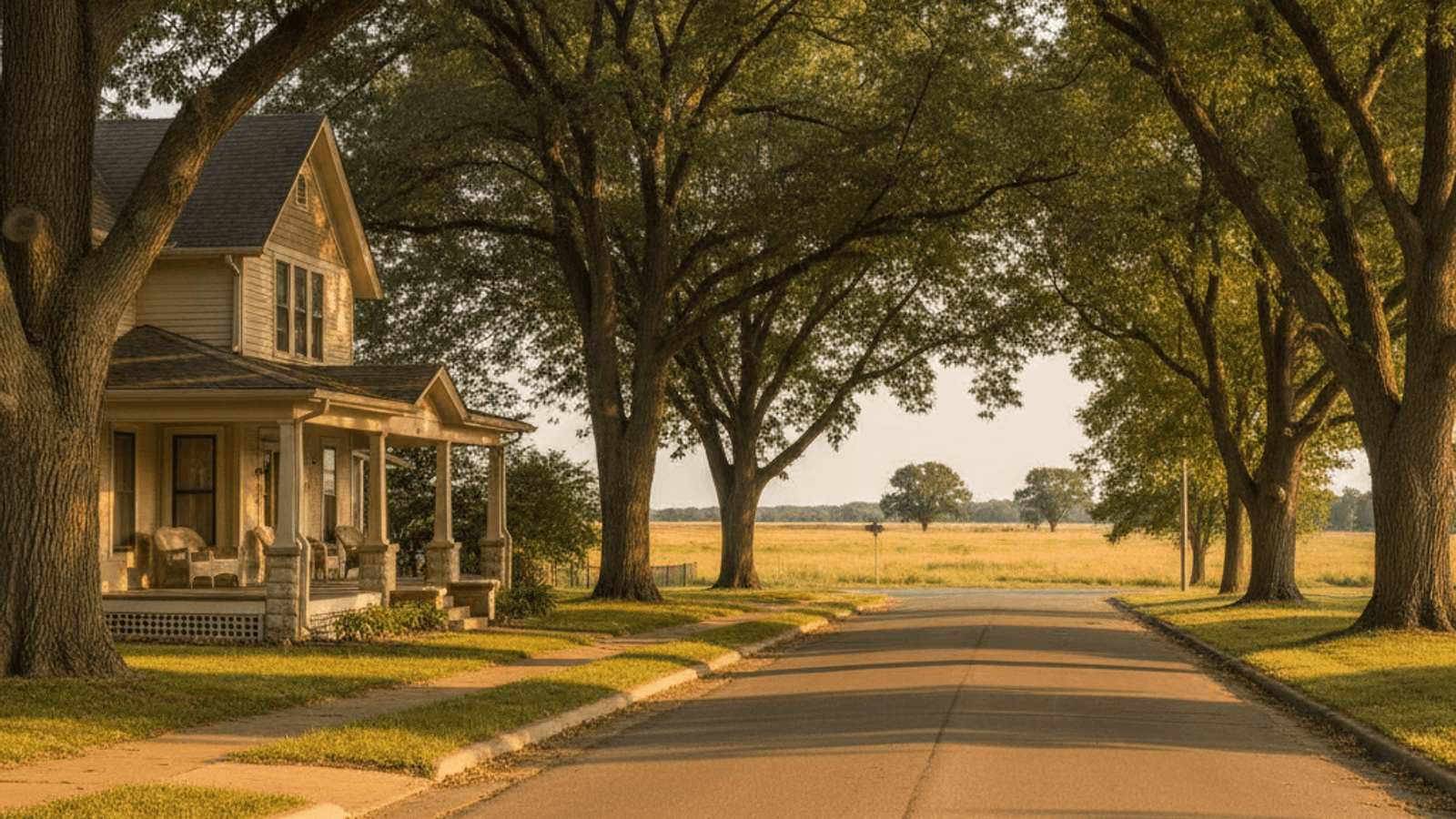
Yellowing, browning, or wilting leaves on one or more elm branches is called flagging. Kansas State University’s Tree and Shrub Problems in Kansas (MF3132) lists that pattern, often first in summer heat, among the signs associated with Dutch elm disease. Flagging is a reason to get the tree evaluated. It is not a confirmed diagnosis by itself.
Dutch elm disease is caused by the fungi Ophiostoma novo-ulmi and O. ulmi. Infected trees can die in weeks, or they can survive a year or more. Brown streaking in the sapwood is another listed sign. An adjacent MF3132 entry on Verticillium wilt also lists elm and wilting, so a similar-looking decline can have more than one cause.
Kansas Forest Service (Dutch elm section, updated April 16, 2026) records that American elm was once the most widely planted tree in the United States, prized for a graceful form, rapid growth, and adaptability. Since the 1930s, Dutch elm disease has killed millions of elms and, in Kansas, has virtually eliminated old-growth specimens. That is the statewide backdrop. On a Greater Topeka property, the useful question is the elm you have: what the symptoms support, how the disease can move, and which options still fit after a diagnosis.
Symptoms versus a diagnosis
MF3132 ties Dutch elm disease to flagging, summer-heat timing, and brown sapwood streaking. It also treats diagnosis and severity as what shapes the next step, not a name you assign from the curb. Do not convert a visual pattern into a homeowner diagnosis, and do not start cutting, injecting, or treating on that guess.
A tree health assessment can document the species, the pattern of wilt, site conditions, and nearby elms. Independent insured tree-service providers in the Greater Topeka network can then explain what diagnostic work is appropriate. Similar symptoms remain evidence until that work is done.
Beetles and root grafts
MF3132 reports two spread paths: elm bark beetles and root grafts. Neighboring elm roots can graft together, so the infection can pass underground as well as from tree to tree by beetles.
Because both paths exist, MF3132 calls scouting and sanitation critical. A neighboring elm that still looks mostly green can share grafted roots with a tree that is already infected. Root-graft management needs planning before an infected tree is removed. That planning belongs with a qualified provider. It is not a do-it-yourself trench around the trunk.
Why early evaluation changes the options
Diagnosis and severity affect what is still on the table. MF3132 notes that injections may prevent or treat very early high-value infections. That approach is not always effective, and it does not replace sanitation. Once an infection is no longer very early, treatment of that kind may already be the wrong tool, and removal plus sanitation may be the remaining path.
Early evaluation is how you find out whether the tree is infected, how far it has gone, and whether other elms on the lot sit in the same root system, before anyone chooses treatment or removal. Do not inject an elm yourself.
Treatment, removal, and the wood
Treatment consideration, taking the tree down, hauling, stump work, and disposal are different jobs. A written quote should say which of those it includes.
If the tree comes out, MF3132 states that diseased elm wood should not be kept as firewood unless it is debarked. Follow a professional, locally lawful disposal plan. Do not burn infected wood as a backyard control method.
Tree trimming can address specific dead or damaged limbs. Pruning is not a Dutch elm disease diagnosis, and it is not a general cure.
Resistant varieties for new plantings
MF3132 notes that resistant elm varieties are available for new plantings. That is a species-choice fact when you are planting. It does not treat an elm that is already sick, it does not guarantee a cultivar will stay healthy, and it does not restore the old-growth American elms that Kansas Forest Service says were virtually eliminated in Kansas.
If the tree in question is an oak rather than an elm, the disease problem and the calendar are different. Kansas guidance on oak wilt includes avoiding oak wounding and pruning in April, May, and June.
Call Topeka Tree Pro at (785) 333-4052 to request an estimate. We connect Greater Topeka homeowners with independent licensed and insured tree-service providers. Verify availability, written scope, qualifications, and insurance directly with the provider. The provider determines any estimate or visit fee.