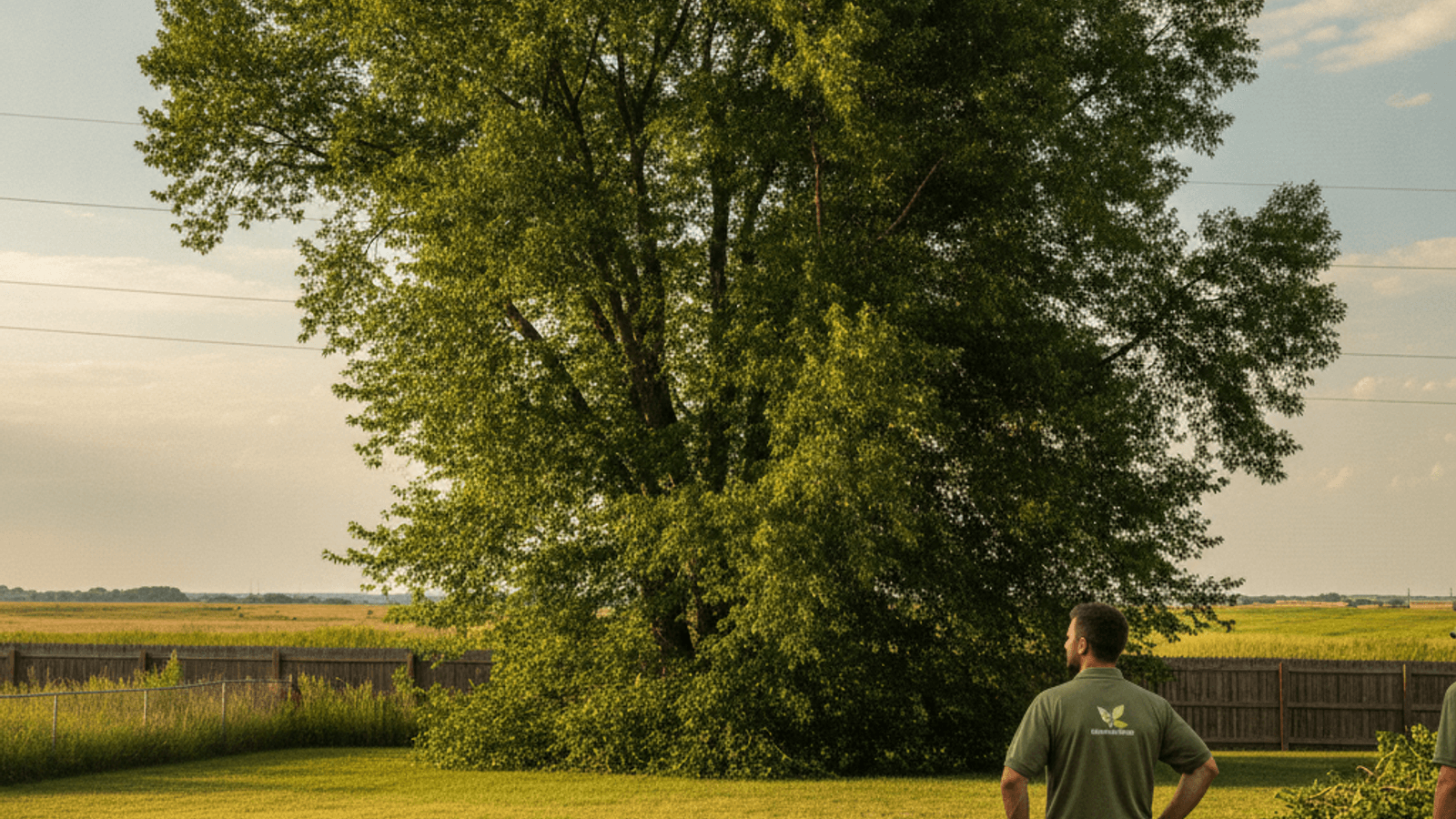
Utility line-clearance work and whole-tree care address different hazards. Work near energized lines belongs with the utility or its authorized line-clearance providers. A separate insured tree-service provider can assess branches, structure, and property risks away from the electrical hazard. One visit shouldn’t be treated as proof that every part of a tree is safe.
What Evergy’s line-clearance trimming is actually for
Utility vegetation work is performed to protect the electrical system. The exact work Evergy authorizes can depend on the line, easement, tree position, and current conditions. Homeowners should confirm responsibility and planned work directly with Evergy before hiring anyone near a line.
A line-clearance cut may look different from ordinary pruning because electrical clearance drives the work. Its appearance alone doesn’t establish the tree’s health, stability, or future risk.
What should be assessed separately?
Don’t use completed utility trimming as a whole-tree inspection. A separate tree-service provider can assess:
- Broken, hanging, or visibly cracked limbs away from the electrical hazard
- Branches extending over a house, driveway, fence, or other target
- Changes in lean, exposed damage, or an uneven canopy
- Symptoms that may need professional diagnosis
- Access, obstacles, and the homeowner’s intended result
Similar symptoms can have several causes. A provider should inspect the actual tree and site before recommending pruning, monitoring, or removal.
When should you request a separate assessment?
Request an assessment if you see new cracks, broken limbs, hanging branches, exposed damage, or a visible change in lean. Branches extending over buildings, driveways, or fences may also deserve attention. These signs call for evaluation, but none proves a diagnosis from the ground.
An insured provider offering tree trimming can inspect actual access, obstacles, tree condition, and the intended result. Ask what the written quote includes and whether coordination with Evergy or the City of Topeka is needed.
Before authorizing work, confirm property ownership and any required permission with the appropriate authority. Our Topeka tree removal permit guide outlines questions to check, but the utility or city should confirm current requirements.
After a storm, address electrical hazards first
Stay clear of downed power lines, hanging branches, and unstable damaged trees. Do not touch a tree resting on a line or cut branches under tension. Report electrical hazards to the utility and keep other people away from the area.
Separate damage, such as a broken limb over a structure or a tree blocking access, may require emergency tree service. An independent provider should assess the actual condition, obstacles, and safe work area after electrical hazards have been handled.
How does utility timing affect your plan?
Evergy’s timing and authorized scope aren’t substitutes for homeowner-requested tree care. If growth appears close to a line, contact Evergy first and ask who may work there. Don’t hire a general tree crew to enter an electrical hazard area.
For work away from lines, ask an independent provider about availability, tree condition, access, and written scope. Those details help separate utility coordination from pruning, hauling, or other requested work.
What can you tell after a line-clearance cut?
Appearance alone can’t confirm stability. Note fresh cracks, hanging limbs, exposed damage, or a visible change in lean. Keep people away from any immediate hazard. An independent provider can assess the whole tree and explain whether monitoring, pruning, or removal should be considered.
A lopsided canopy may justify closer inspection, but it doesn’t prove that trimming caused instability. Species, site conditions, prior damage, and branch structure all need direct assessment.
A trimmed tree near the line can still be a risk everywhere else
A recent utility trim may reduce a line-clearance concern without answering separate questions about limbs over structures or damaged wood. Those risks require direct assessment of the tree, site, and nearby targets. A completed trim isn’t proof that the entire tree is safe, and it isn’t proof that the tree is unstable.
Frequently asked questions
Does Evergy trim my whole tree or just the part near the power line?
Utility vegetation work focuses on electrical clearance, but the exact scope varies. Confirm responsibility and planned work with Evergy. A separate provider can assess the rest of the tree.
Do I need to schedule my own tree trimming if Evergy already trimmed my tree?
Maybe. Utility work doesn’t establish the condition of the rest of the tree. Request an assessment if you see cracks, hanging limbs, exposed damage, or other concerns away from the line.
Who do I call if a tree limb is tangled in a power line after a storm?
Call Evergy or the responsible utility and stay well clear. Never touch or move a branch or tree contacting a power line, even if the line looks disconnected.
For concerns away from electrical hazards, call Topeka Tree Pro at (785) 333-4052. We’ll connect you with an independent insured tree-service provider. Ask the provider to assess the tree, site access, obstacles, and requested work.