Stump grinding across Greater Topeka
Stump grinding in Greater Topeka starts with how you plan to use the area afterward. Topeka Tree Pro connects homeowners with independent insured providers who can assess the stump, access, obstacles, and intended result. Ask for a written scope covering the grind area, debris, and site finishing.
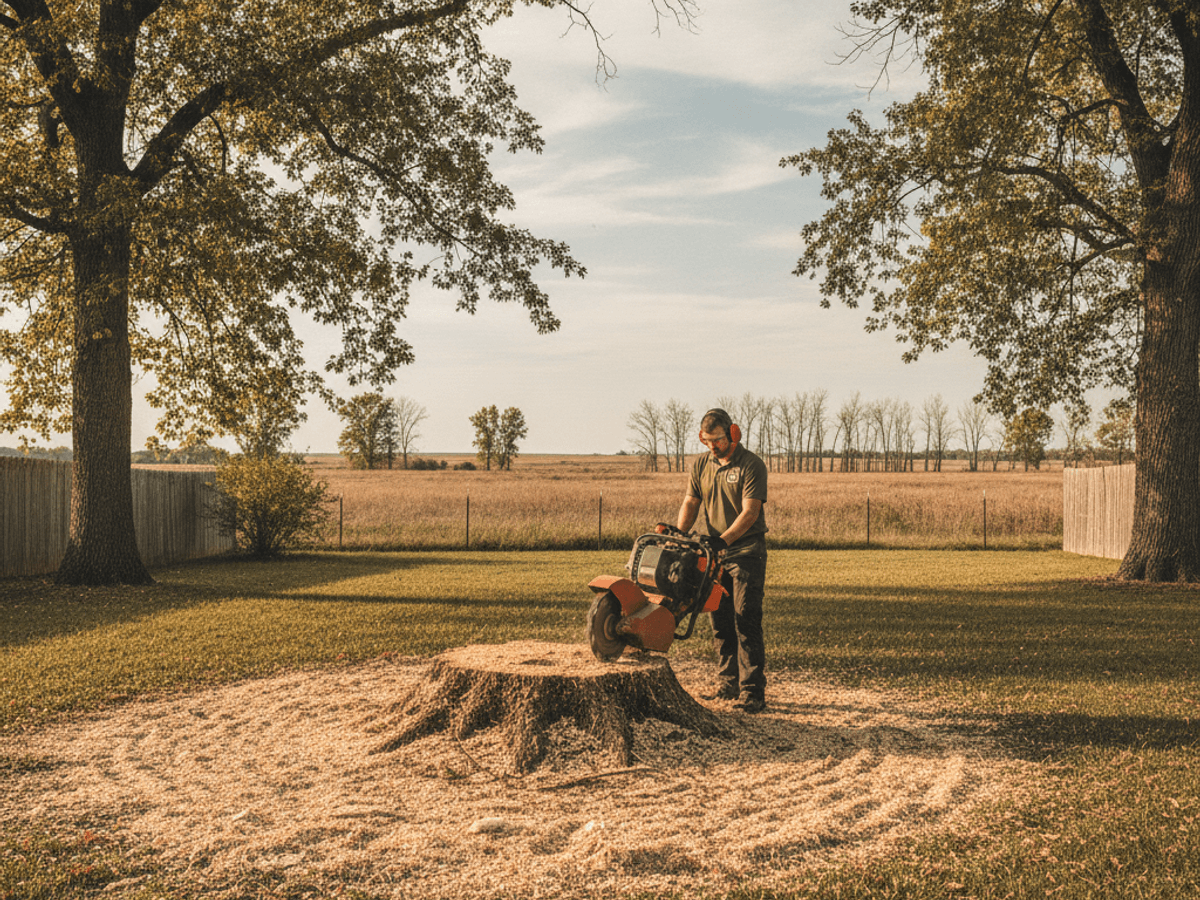
What does Stump Grinding and Removal include?
- Discuss a grind depth suited to your reseeding or landscaping plans.
- Ask the provider to assess the root flare and any visible new shoots before defining the grind area.
- Include debris hauling or on-site mulch in the written quote when requested.
- Ask whether filling and leveling the grind site are included.
- Request one written scope for multiple stumps after clearing or storm cleanup.
- Assess any old stump that remains from a previous tree removal.
When do you need this service?
- A stump is sending up new shoots year after year
- You're reseeding, landscaping, or leveling the yard
- A stump sits where a new structure or paving is planned
- A stump from an earlier removal was never ground out
- An older stump is taking up usable space or affecting plans for the yard.
Frequently asked questions
Why does my cottonwood stump keep sprouting new growth?
New growth can mean living roots remain, but appearance alone doesn't show how much root tissue is active. Ask a provider to assess the stump, root flare, and visible shoots. The written scope should explain whether grinding fits your goal and what follow-up may be needed.
Can you grind an old stump that has been dead for years?
Often, yes. Feasibility depends on access, nearby obstacles, stump condition, root spread, and how you plan to use the area. A provider can inspect the site and explain the practical grinding options.
Does hackberry or bur oak resprout the way cottonwood does?
Species alone cannot predict whether a particular stump will resprout. Ask the provider to inspect any new shoots and the visible stump and root area. The proposed scope should reflect the actual condition and your plans for the site.
How deep does a stump actually need to be ground?
The needed grind depth depends on what you want to do with the area afterward. Reseeding, landscaping, paving, and replanting may require different scopes. Ask the provider to state the planned depth, grind area, debris handling, and treatment of visible surface roots in writing.
Is it worth grinding an old elm stump left from Dutch elm disease?
It may be worthwhile if the stump interferes with mowing, access, landscaping, or future use of the area. Do not assume disease caused the earlier removal based on the stump's age or species. Ask the provider to assess its condition and quote the scope needed for your intended result.
Where can homeowners request Stump Grinding and Removal in Greater Topeka?
We connect homeowners across Greater Topeka with independent insured providers, subject to provider availability. Choose your city, request an estimate, and confirm the written scope directly with the matched provider.
See stump grinding and removal in all 31 cities
Stump Grinding and Removal: helpful guides
Need stump grinding and removal in Greater Topeka?
Call to request an estimate and confirm current availability and any estimate or visit fees with the matched provider.