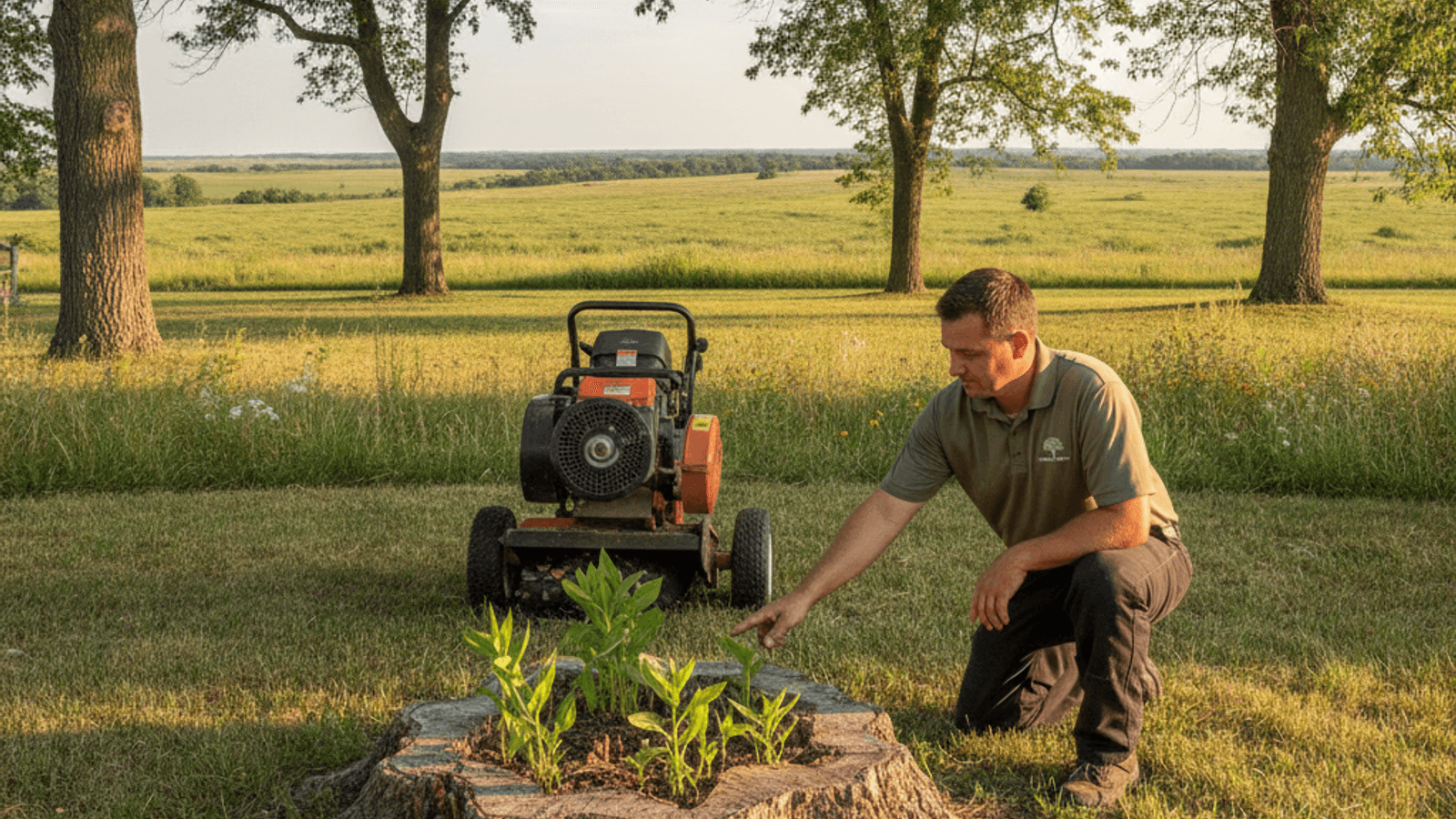
Cottonwood stump sprouting in Topeka can continue after the trunk is removed because living roots may still produce shoots. Sprouts near the stump or elsewhere in the yard don’t reveal the full root condition or prove that the earlier work was faulty. The next step depends on the species, remaining roots, access and intended use of the area.
What causes cottonwood stump sprouting in Topeka?
Cottonwood stump sprouting can occur when living tissue remains in the stump or connected roots. Those roots may use stored energy to produce shoots after the trunk is gone. Shoots can appear beside the stump or along roots extending into the yard.
Visible shoots alone don’t show which roots remain active or how far they extend. They also don’t prove that a sidewalk problem, soil condition or nearby shoot has one specific cause. Ask a provider to inspect the stump, exposed roots, drainage, obstacles and nearby hardscape before recommending work. If roots are affecting pavement, our guide to tree roots lifting a sidewalk explains the separate factors to assess.
What should a stump-grinding quote cover?
No single grinding depth guarantees that cottonwood shoots will stop. Grinding removes the stump within the agreed work area, but it doesn’t clear every root throughout the yard. Shoots away from the stump may need separate assessment because their connection and condition aren’t visible from the surface.
Ask the provider to inspect the stump diameter, root flare, access, fences, pavement, utilities and the result you want afterward. The written quote should define the grinding area, intended finish level, chip handling, hauling, surface repair and any excluded root work. It should also explain what follow-up is available if shoots continue.
If you’re planning tree removal, discuss the stump and surrounding roots before work begins. The stump grinding scope can then reflect the actual site instead of assuming that removing the trunk settles every root issue.
Should you treat the stump before grinding?
Don’t choose a treatment from the shoots alone. Similar growth can involve different species, root connections and site conditions. Ask a qualified professional to identify the plant and explain whether treatment, grinding, repeated cutting or monitoring fits the actual site. If a treatment is proposed, request the product, application scope, precautions and follow-up plan in writing before work begins.
Why should new shoots be assessed early?
Shoots can become harder to manage as they grow and spread through an area used for mowing, planting or walking. Their appearance doesn’t show whether the best response is grinding, cutting, treatment or monitoring. It also doesn’t reveal the likely cost.
Photograph where the shoots appear and note nearby fences, pavement and utilities. A provider can use those details during an on-site assessment and explain which growth is included in the proposed work.
What affects a stump-grinding estimate in Topeka?
A stump-grinding estimate depends on the actual stump, root flare, access, obstacles and requested finish. Root shoots elsewhere in the yard may fall outside the stump-grinding area, so point them out during the assessment.
Compare written quotes by scope rather than price alone. Ask each provider to identify the grinding boundary, intended finish level, chip and debris handling, surface repair, excluded roots and follow-up options. Topeka Tree Pro can connect you with an independent insured provider, but availability and the final estimate come from that provider after the site is assessed.
How do site conditions affect the work?
Soil condition, drainage and moisture belong in the site assessment. Excessively wet or dry ground can affect access and the condition of the surrounding lawn, but the county or season doesn’t reveal what is happening at one stump.
Ask the provider to inspect the work area before scheduling. The written scope should address machine access, lawn protection, nearby obstacles and how weather-related changes will be handled.
Does sprouting always require more grinding?
No. New shoots don’t automatically prove that more grinding is the right response. The choice depends on the plant, remaining roots, shoot locations, nearby obstacles and how you plan to use the area.
Ask a provider to compare monitoring, repeated cutting, treatment and additional grinding for the actual site. The recommendation should identify what each option addresses and what may remain afterward.
Frequently asked questions
How deep does a stump grind need to be to stop cottonwood sprouting?
No fixed depth guarantees that sprouting will stop. Ask the provider to inspect the stump, root flare and shoots, then define the grinding boundary and intended finish in the written quote. Grinding at the stump doesn’t remove every lateral root in the yard.
Will cutting down a cottonwood without grinding the stump cause more sprouts?
It can. Living stump or root tissue may produce shoots after the trunk is removed, but the visible response varies by tree and site. Have the remaining stump and shoots assessed before choosing follow-up work.
Can I keep cutting cottonwood sprouts instead of grinding?
Repeated cutting may be one option, but it doesn’t guarantee that the shoots will stop. Ask a provider to identify the plant, examine where the shoots emerge and compare the available approaches for your intended use of the area.
If a stump keeps producing shoots, call Topeka Tree Pro at (785) 333-4052. We’ll connect you with an independent insured tree-service provider who can assess the site and prepare a written quote. Verify the proposed scope, qualifications and insurance directly with the provider.