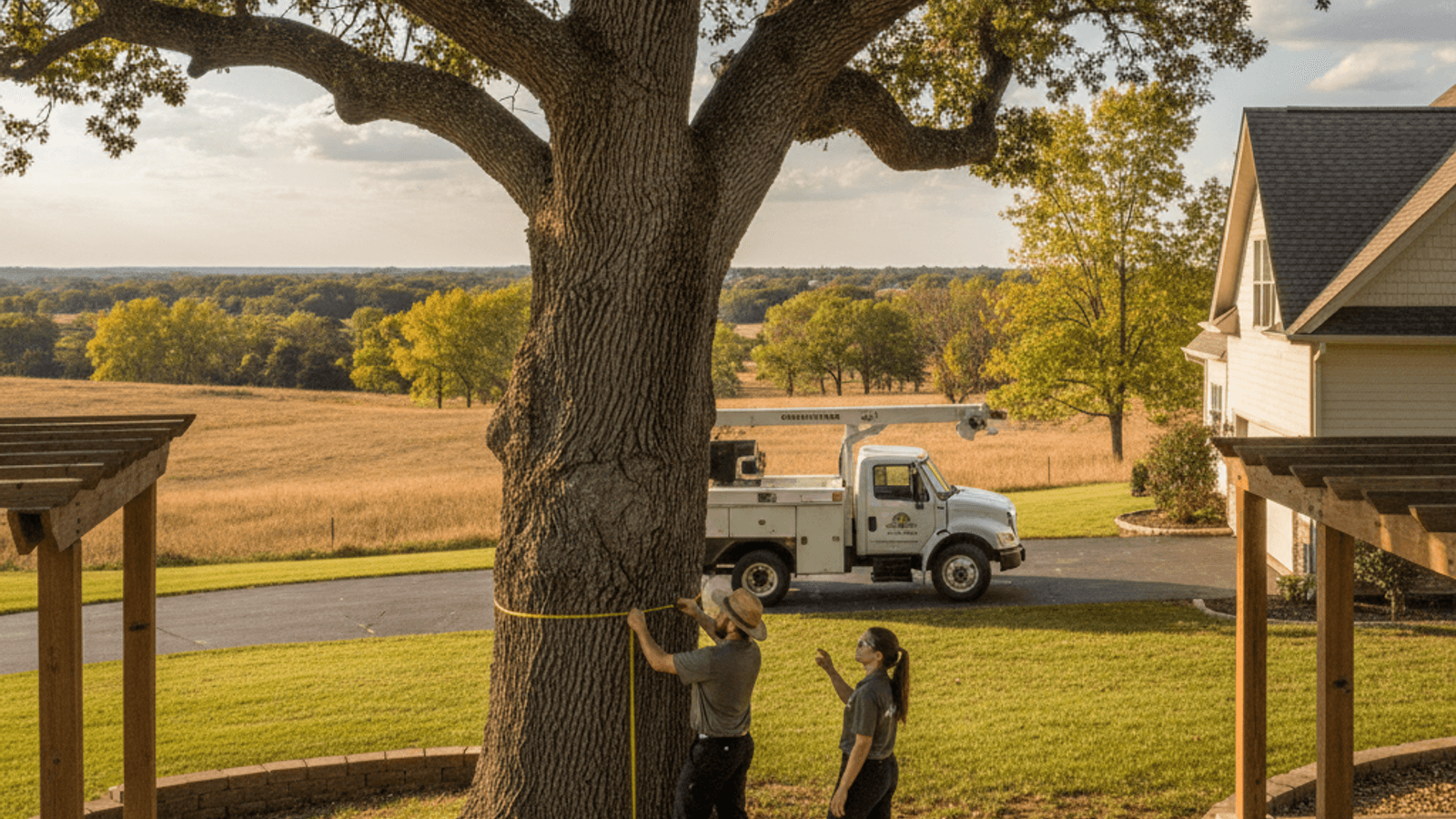
Tree removal cost in Topeka depends on the actual tree, its condition, nearby obstacles, equipment access, cleanup, hauling, and stump work. A tree removal provider should inspect the site and define the scope before pricing it. Compare written estimates line by line instead of relying on a general range.
What affects tree removal cost in Topeka?
Tree size matters because it can change the cutting, rigging, equipment, and debris-handling plan. Size alone does not produce a reliable price. Condition, lean, branch structure, nearby property, electrical hazards, and usable work space can change the scope.
Ask each provider to inspect the tree and describe the planned work. The written estimate should identify removal, hauling, cleanup, wood handling, and site protection. It should also state what is excluded.
Stump grinding may be quoted separately from tree removal. Ask whether the quote includes stump work, how much of the stump will be ground, how debris will be handled, and whether remaining roots or surface restoration are outside the scope.
What actually drives the price
Height and trunk diameter. These measurements help a provider plan cutting, rigging, equipment, and debris handling. They should be considered with the tree’s condition, surrounding obstacles, and available work space.
A 7-12 inch trunk diameter is listed at $500-$2,000 and a 13-20 inch trunk diameter at $900-$3,000 in Wellnitz Tree Care’s undated cost guide. The guide’s publication date isn’t established, and those figures are that provider’s published illustrations, not Topeka Tree Pro prices, a Topeka average, or verified 2026 rates. Access, condition, obstacles, cleanup, hauling, and requested stump work still change a current bid.
Species. Wood density and branch structure matter more than people expect. A cottonwood is fast-growing and often has weaker wood with a wider, brittle branch structure, more limbs to manage, more cleanup volume. A bur oak has denser wood and a heavier trunk, which affects how it has to be sectioned and rigged down safely. Silver maple splits easily and tends to have multiple co-dominant stems, which changes the removal approach entirely compared to a single-trunk tree.
Proximity to structures and power lines. Roofs, fences, nearby property, and electrical lines can change the work plan. Stay clear of downed lines, hanging branches, and unstable trees. Contact the utility for electrical hazards and request a professional assessment before approaching damaged areas. For urgent tree hazards, use emergency tree service to request provider availability.
Access for equipment. Gates, fences, slopes, surfaces, and usable approach space affect the work plan. Ask the provider to inspect access and explain any protection, equipment, or debris-handling requirements in the quote.
Urgent versus scheduled work. A storm-damaged or unstable tree may require a different assessment and work plan. Do not decide that damaged wood is stable because its appearance has not changed. Ask the provider to state availability, urgency, and any scheduling-related charges in writing.
What’s usually included in a removal quote
Do not assume a removal quote includes hauling, chipping, stump grinding, wood left on site, surface protection, or lawn repair. Ask the provider to list each included task and exclusion. A detailed written scope makes competing estimates easier to compare before you sign.
Ask the provider for current proof of insurance and verify what the policy covers before work starts. Do not treat a low estimate as proof of missing coverage, or a higher estimate as proof of adequate coverage. Your homeowners policy is a separate question. Our guide to homeowners insurance and tree removal in Topeka explains what to ask your insurer.
Why bigger isn’t always the biggest cost driver
Height does not determine the quote by itself. Access, tree condition, nearby structures, electrical hazards, and the requested cleanup can change the work plan. Ask the provider to explain which site conditions affect the estimate.
For multiple trees or stumps, request an itemized quote for the complete visit. Compare that total with separately itemized work, but do not assume bundling creates a discount. Confirm what equipment, hauling, stump work, and cleanup each option includes.
Getting an accurate quote instead of a guess
A phone estimate based on a homeowner’s description is never going to be as accurate as someone standing in the yard looking at the actual tree. Trunk diameter is hard to judge over the phone, and access issues, a narrow side yard, a fence that has to come down, a slope that limits where equipment can park, often only become obvious in person. If a quote seems unusually low compared to others you’ve gotten, ask specifically what’s included and whether the person actually walked the property or is pricing off a photo.
Ask each provider to put expected scheduling and any limits on availability in writing. Visible decline or storm damage does not establish the cause or urgency by itself. Keep away from unstable trees and have dangerous damage assessed professionally.
One question belongs on every quote call inside city limits: does the company hold a City of Topeka tree service license? The city code requires one, sets a minimum liability insurance level, and requires the company name and address on both sides of the truck. Our Topeka tree removal permit and licensing guide covers what to ask for and what the numbers are.
When should you stay clear of a damaged tree?
Stay clear of downed power lines, hanging branches, and unstable damaged trees. Do not cut branches under tension. Electrical hazards belong with the utility, while dangerous tree damage needs professional assessment. Avoid topping damaged trees. Severe damage may make removal the safer recommendation after an on-site evaluation.
Frequently asked questions
Does removing a tree include stump grinding?
It depends on the written quote. Ask whether stump grinding is included, how much of the stump will be ground, what happens to the grindings, and whether remaining roots or surface repair are excluded. Do not assume combined work includes a discount.
Why do quotes vary so much between companies?
Crew size, insurance coverage, and equipment all factor into overhead, and a company running a crane crew prices differently than a two-person climbing crew. It’s worth getting more than one quote, but also asking what’s included, cleanup, hauling, stump grinding, so you’re comparing the same scope of work. If a quote leaves the debris with you, price that out before you accept it, since our guide to tree debris disposal in Topeka shows what the curbside limits and yard waste tip fees actually run.
Is it cheaper to remove a tree in winter?
Not necessarily. Season alone does not establish the price. Ask providers to quote the same written scope and confirm current availability. Dangerous or unstable damage should be assessed based on the actual condition, not delayed for a hoped-for seasonal discount.
An accurate estimate requires an on-site review of the tree, access, obstacles, and requested result. Topeka Tree Pro connects Greater Topeka homeowners with independent insured tree-service providers. Call (785) 333-4052 to request an estimate, then verify availability, qualifications, insurance, written scope, and any estimate or visit fees with the matched provider.