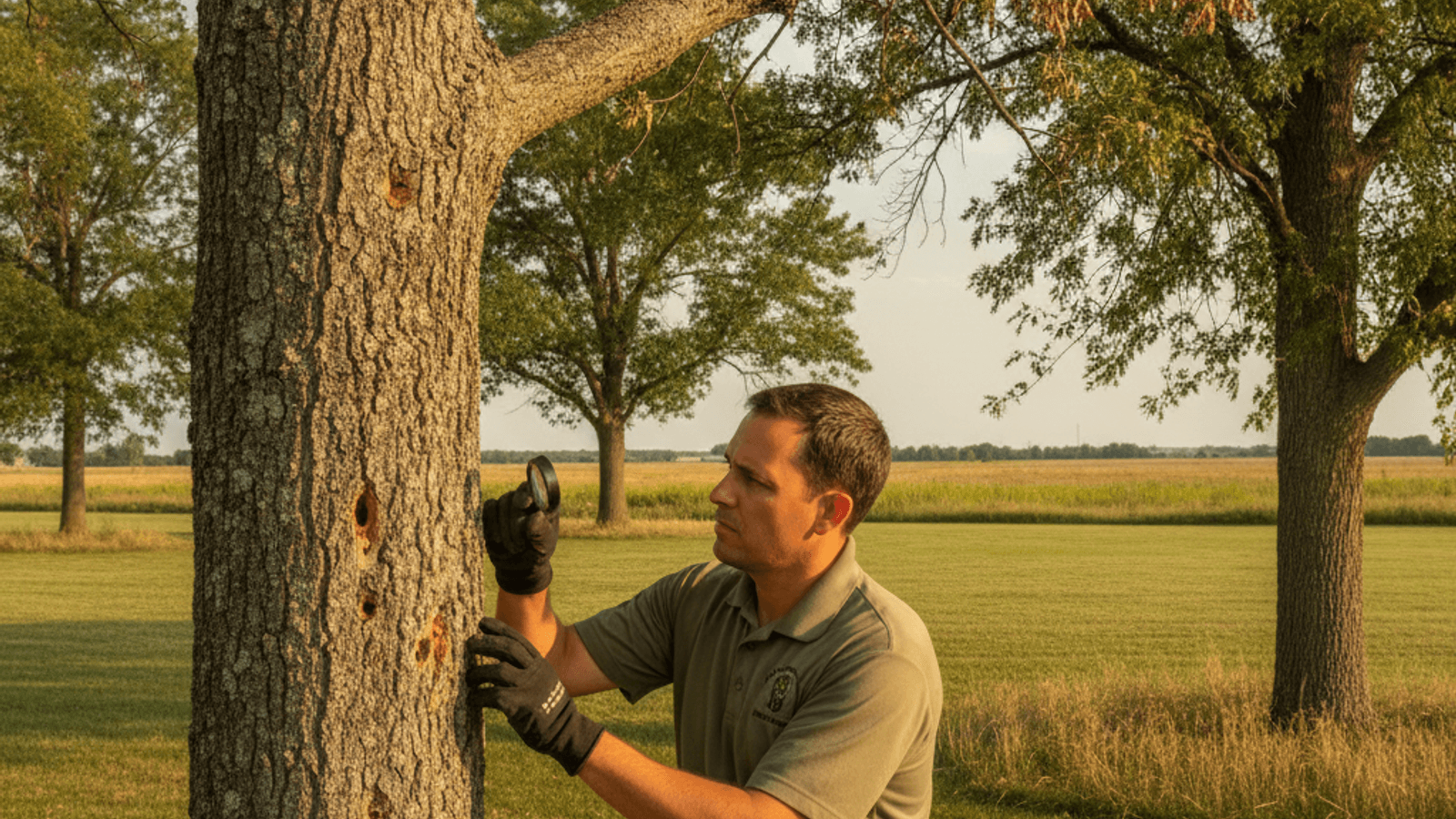
Emerald ash borer symptoms can resemble drought stress, damage, and other tree problems. To evaluate an ash tree in Shawnee County, note changes in the canopy, bark, trunk, and branches, then request an in-person diagnosis. A neighborhood name or one visible symptom can’t confirm an infestation.
What emerald ash borer actually is
Emerald ash borer is a small metallic-green beetle that lays eggs in bark crevices on ash trees. The larvae tunnel underneath the bark and feed on the layer of tissue that moves water and nutrients through the tree. That feeding cuts off the tree’s circulation from the inside out, section by section, until the canopy can no longer support itself.
Regulations and confirmed detection zones shift as the insect spreads, so don’t rely on last year’s map. If you want a current read on where it’s been confirmed near Topeka, check with the Kansas Department of Agriculture or ask a local arborist doing a tree health assessment to look at your specific trees. What matters for your yard isn’t the county-wide status. It’s what your own ash trees look like right now.
What are possible emerald ash borer signs?
Possible signs include upper-canopy thinning, D-shaped exit holes, unusual woodpecker activity, bark splitting, galleries beneath loose bark, and new shoots along the trunk or near the base.
These observations help a provider investigate the problem, but they don’t confirm emerald ash borer by themselves. Drought, root problems, physical injury, other pests, and site conditions can produce overlapping symptoms. Avoid peeling sound bark or cutting into the tree to diagnose it yourself.
Photograph what you can see safely and note when the change appeared. A qualified provider can examine the tree, consider other causes, and explain whether additional confirmation is needed.
How should suspected infested wood be handled?
Don’t move or dispose of suspected infested ash wood based on a guess. Handling requirements and accepted destinations can vary. Ask the diagnosing provider how the material should be contained, hauled, and disposed of, then confirm the destination before moving it.
Our guide to tree debris disposal in Topeka explains questions to ask about local disposal. If a government agency has issued current instructions for the material, follow that agency’s published guidance.
What does treatment involve?
Treatment options depend on the confirmed problem, the tree’s condition, the product being considered, and the provider’s qualifications. Ask the provider to identify the product, explain why it fits the diagnosis, describe the application and follow-up plan, and state the expected limitations in writing.
Compare that written treatment scope with the alternatives. The decision may account for the tree’s condition, location, surrounding targets, future care, and the possibility of removal and replanting. No single option is automatically the better value for every ash tree.
How do you decide between treatment and removal?
Start with an in-person assessment rather than a canopy percentage. The provider should consider the diagnosis, tree condition, structural damage, access, surrounding obstacles, and the intended result. Similar symptoms can have several causes, and visible decline alone doesn’t establish whether treatment will work.
Ask for written options that explain what treatment would include, what follow-up may be needed, and what outcome remains uncertain. If tree removal is recommended, ask whether hauling and stump work are included and how nearby structures or utilities affect the plan.
Don’t approach a tree with hanging branches, unstable damage, or nearby electrical hazards. A utility must handle electrical hazards, while dangerous tree damage needs professional assessment. If a pine is browning rather than an ash, why a pine tree turns brown in Topeka outlines other questions to investigate.
How do I know if my ash tree is worth saving?
You can’t determine that from canopy coverage or one symptom alone. An assessment should consider the diagnosis, overall condition, structural damage, site, obstacles, and realistic treatment limitations. Ask the provider to compare written treatment and removal scopes before you decide.
How fast can an affected ash tree decline?
There isn’t a dependable timeline for an individual tree based on appearance alone. The cause, existing condition, site conditions, and extent of damage can change the outlook. Have a worsening tree assessed instead of using a generic timeline to postpone action.
Are all ash trees affected in the same way?
No individual tree should be diagnosed from its neighborhood, age, or species name alone. First confirm that the tree is an ash, then have the observed symptoms and site conditions evaluated before choosing treatment or removal.
What should I replant after removing an ash tree?
Choose a replacement only after checking the site’s soil, drainage, moisture, light, obstacles, and available space. Ask a nursery or provider to compare suitable species and mature sizes for that location. If you’re considering an oak, our guide to oak wilt in Topeka explains why symptoms require diagnosis and why oak-wounding season matters.
If an ash tree shows concerning changes, Topeka Tree Pro can connect you with an independent insured tree-service provider. Ask the provider to assess the tree in person and compare treatment and removal in writing. Call (785) 333-4052 to request an estimate and verify availability.