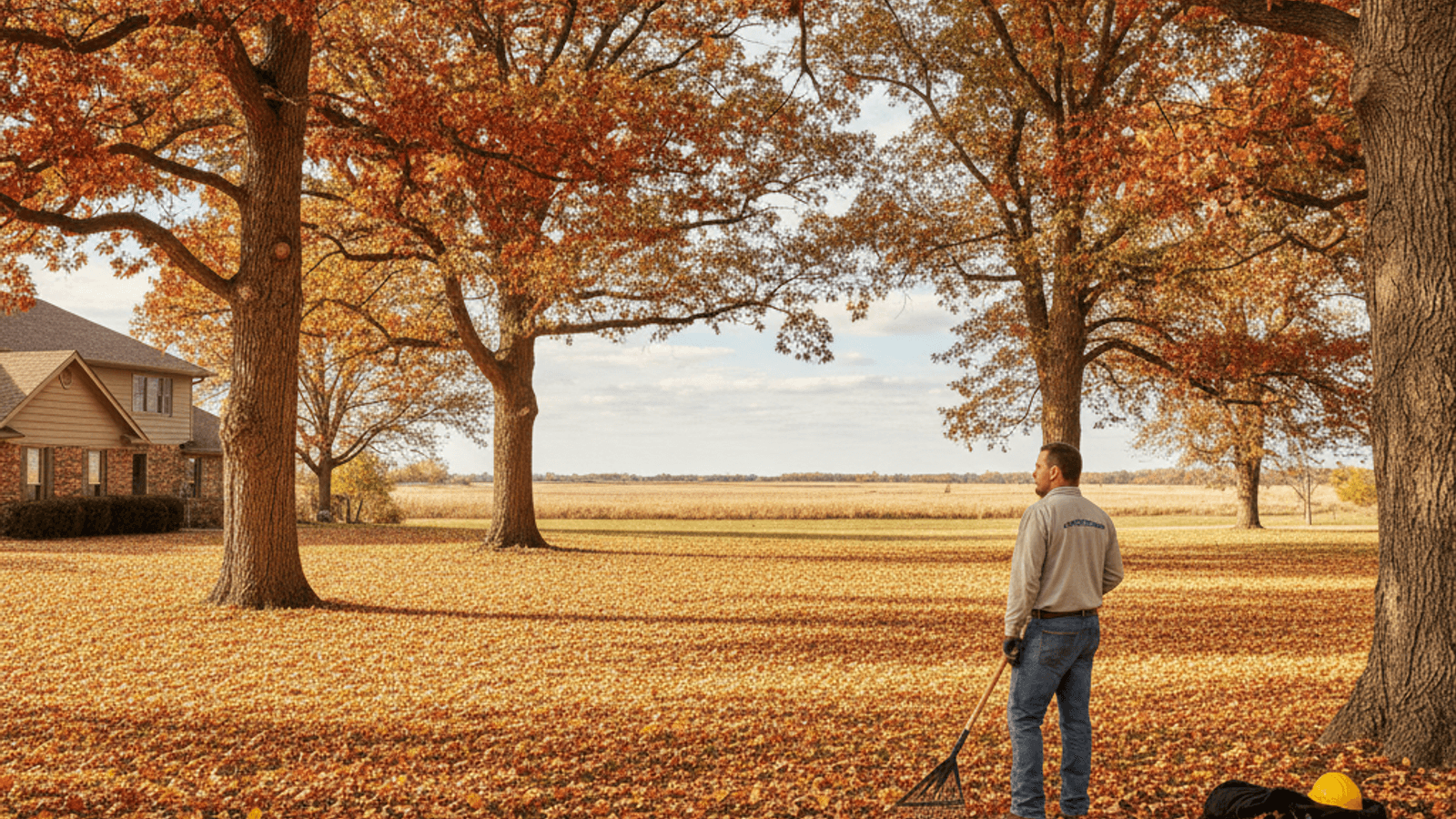
Leaving leaves in Topeka can help some planting beds, while dense wet mats can block light and air over active turf. Rake, mulch, or haul based on where leaves collect, drainage, mixed debris, and how much you can safely handle. Check current local disposal rules before loading or bagging material.
The practical choice depends on the site, not one calendar date for every yard.
Why does leaf buildup need attention?
Leaf drop can be uneven, and rain can quickly make piles heavier and harder to move. Dense layers may cover turf, block drainage, hide fallen branches, or make walkways slippery.
Check gutters, drains, fence lines, planting beds, and active lawn areas. Move leaves away from places where they trap moisture or obstruct water flow. Conditions can vary across the same property, so one cleanup method may not fit the entire yard.
Where can leaves stay in the yard?
Loose leaves can remain in ornamental beds or wooded areas when they stay contained and don’t block drainage. Shredding them may make the material easier to spread and keep in place.
Avoid dense mats over active turf or places where water already collects. Clear leaves from walkways, gutters, street drains, and areas where they could blow onto neighboring property.
Watch how the site responds after rain. If leaves stay saturated, shift, or collect against a structure, move them to a better location or include them in the cleanup.
When should you mulch, haul, or hire help?
A mower or leaf shredder can reduce dry leaves when the equipment is designed for that use. Follow the manufacturer’s instructions and stop if hidden branches, stones, or other debris make the work unsafe.
If you plan to use a public yard-material facility, confirm its current accepted materials, fees, hours, and unloading rules through the official source before leaving home. The guide to tree debris disposal in Topeka explains the questions to check.
For a cleanup involving branches, ask an independent provider whether the written quote includes leaf collection, tree trimming, chipping, hauling, and disposal. The estimate can depend on debris volume, moisture, access, obstacles, equipment needs, and the requested end result.
Should you clean up in October or November?
Use yard conditions and the forecast instead of relying on one date. Start when enough leaves have collected to cover turf, block drainage, or make walking surfaces slick.
Several smaller passes may be easier than waiting for every tree to finish dropping. Dry material is generally easier to move. If rain is expected, first clear drains, gutters, walkways, and dense patches over active lawn.
Leaves placed in beds should remain loose and contained. Recheck those areas after wind or rain and move material that shifts into drainage paths or against structures.
When should you call for help?
Request an estimate when the debris volume, access, or required equipment exceeds what you can handle safely. Ask the provider to inspect mixed branches and explain what collection, cutting, chipping, hauling, and disposal are included.
For storm damage cleanup, stay clear of hanging branches, unstable trees, and downed power lines. Electrical hazards require utility help. Topeka Tree Pro can connect you with an independent insured tree-service provider for the remaining tree and debris work.
Frequently asked questions
Can I bag and put leaves at the curb for pickup?
Check the current rules from your waste provider before setting leaves out. Accepted materials, bag limits, collection days, and holiday schedules can change.
Do fallen leaves attract pests or rodents?
Leaf piles can provide shelter, especially when they remain undisturbed near structures. Keep dense piles away from foundations, sheds, doors, and other protected corners.
How long do leaves take to break down?
The timing depends on leaf type, moisture, airflow, temperature, and whether the leaves are whole or shredded. Don’t rely on a fixed decomposition date when deciding where material can stay.
Will leaving leaves damage my grass?
Dense, wet leaf cover can block light and air over active turf. Remove or shred heavy accumulations, especially where drainage is poor. A provider can assess the actual lawn and cleanup conditions if damage is already visible.