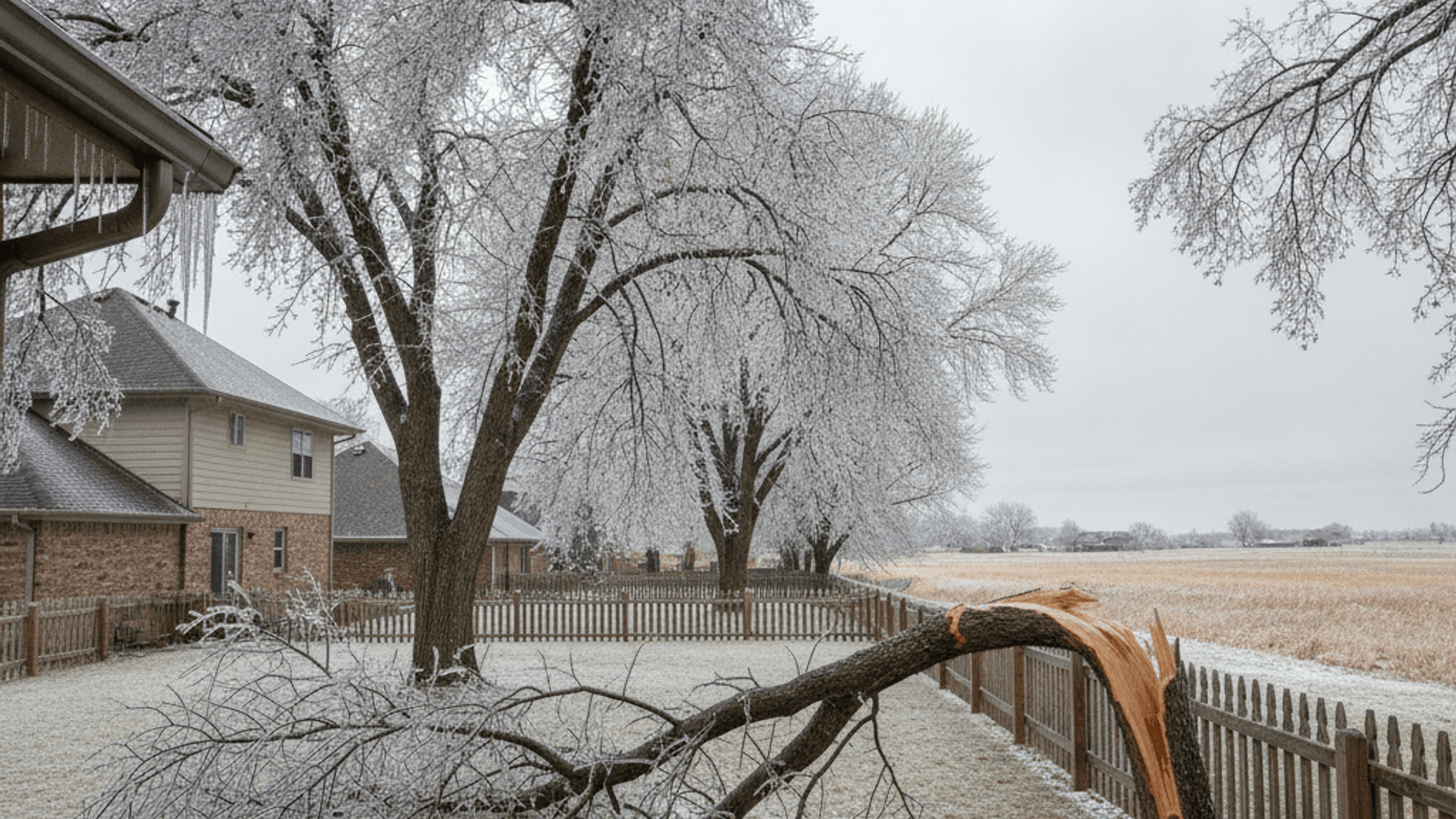
After ice storm tree damage in Topeka, stay clear of downed lines, hanging branches, and unstable trees. Contact the utility about electrical hazards. Once the area is safe, an independent provider can assess cracks, broken unions, and the remaining structure before pruning, support, or removal is considered.
Why ice loads limbs differently than wind
Wind pushes a canopy sideways. Ice accumulates on branches and adds downward weight, which can bend limbs and stress branch unions. The effect varies with the amount of ice, the tree’s structure, its condition, and earlier damage.
Inspect the actual tree instead of predicting damage from one measurement or species name. Broken unions, split wood, hanging branches, trunk movement, and disturbed soil each call for caution and closer assessment.
Post-storm inspection, in the right order
Safety comes first. Look for downed or low power lines before approaching the tree. Treat any line near damaged branches as energized, keep everyone away, and contact the utility. Electrical hazards belong with the utility. Separate tree work should wait until the affected area is released as safe.
Assess hung-up limbs from a distance. A broken limb caught in the canopy can fall without warning. Look up before entering the area, stay clear of hanging wood, and keep other people away. Don’t try to knock a limb down from the ground. Dangerous storm damage needs professional assessment.
Don’t climb to inspect closer. Ice-coated bark and unstable limbs make climbing dangerous even for a trained crew with the right gear. If you need a closer look at damage high in the canopy, that’s a call for storm damage cleanup, not a homeowner with a ladder. A tree leaning on a structure or blocking a driveway after the storm is a job for emergency tree service rather than a scheduled visit.
Check the trunk and major unions once it’s safe. Once ice has melted and there’s no active hazard overhead, look at the trunk and main branch unions for cracks, splits, or bark that’s pulled away from the wood. This is where you’ll find the damage that determines whether a tree can be saved.
When might cabling or bracing be considered?
Split unions and cracked major limbs need an onsite assessment. A provider may consider cabling and bracing after examining the crack, surrounding wood, roots, remaining canopy, and potential targets below the tree.
Support hardware doesn’t restore lost wood or guarantee future stability. Severe damage may require removal, but no single crack description or canopy threshold decides the outcome. Ask the provider what the support is intended to do, what damaged wood must be removed, and what follow-up inspection the plan requires.
How does species affect an inspection?
Species can influence wood characteristics and branching form, but its name alone doesn’t predict whether an ice-damaged tree is stable or salvageable. The inspection should focus on the actual break locations, cracks, decay, root movement, remaining canopy, and nearby obstacles.
Site conditions matter too. Soil, drainage, moisture, previous damage, and available space can change the assessment. If the species is unknown, ask the provider to identify it onsite and explain how that identification affects the recommended work.
What to do with cleanup once it’s safe
Broken or hanging limbs may remain under tension after a storm. Don’t stand beneath them or attempt cuts that could release stored force. A provider can assess where damaged wood should be removed. Ask about selective pruning and avoid topping the remaining canopy.
Before arranging disposal, check current city or county requirements for curbside material and drop-off service. Ask whether the provider’s written quote includes cutting, hauling, disposal, and cleanup. The guide to tree debris disposal in Topeka covers the disposal questions to review.
Insurance and documentation before cleanup starts
If property was damaged, document the scene from a safe location and contact your insurer for instructions. Don’t enter a hazardous area or delay urgent safety work solely to take photographs. Coverage and documentation requirements depend on the policy and circumstances.
Keep written estimates, invoices, photographs, and any professional assessment you receive. A tree that appears unchanged after the storm shouldn’t be assumed stable without an assessment.
The guide to homeowners insurance and tree removal in Topeka lists questions to discuss with the insurer. Ask what documentation is required, which work needs approval, and how emergency safety work should be handled.
When should storm-damaged trees be pruned?
Hazardous, broken, or hanging limbs need their own safety assessment rather than a routine pruning calendar. For ordinary deciduous pruning, K-State generally recommends the period before bud break, from late February through April. Oak is an important exception because April, May, and June pruning can create an avoidable oak-wilt risk. Evergreens and flowering shrubs follow different schedules.
Ask the provider to separate immediate hazard work from pruning that can wait. The written scope should identify the damaged areas, proposed work, hauling, and any support hardware being considered.
Frequently asked questions
How soon after an ice storm should I get a tree inspected?
Arrange an assessment after electrical hazards are cleared and the area can be approached safely. Keep away from hanging branches and unstable trees in the meantime. The provider should assess the actual damage before recommending pruning, support, monitoring, or removal.
Can a tree recover after losing major limbs to ice?
Recovery depends on the actual damage, remaining structure, tree condition, roots, and site conditions. Species alone doesn’t answer the question. A provider should assess the tree before recommending pruning, support, monitoring, or removal.
Should I try to remove ice from tree branches myself?
No. Knocking ice off limbs, especially with a stick or by shaking branches, can snap wood that’s already under maximum stress and bring a limb down on you. Let the ice melt naturally and handle any resulting damage afterward.
If your trees took a hit this winter, don’t guess at what’s salvageable. Topeka Tree Pro connects you with independent insured tree-service providers who can assess the site and explain the available options. Call (785) 333-4052 to request an estimate and verify availability, qualifications, and written scope directly with the provider.