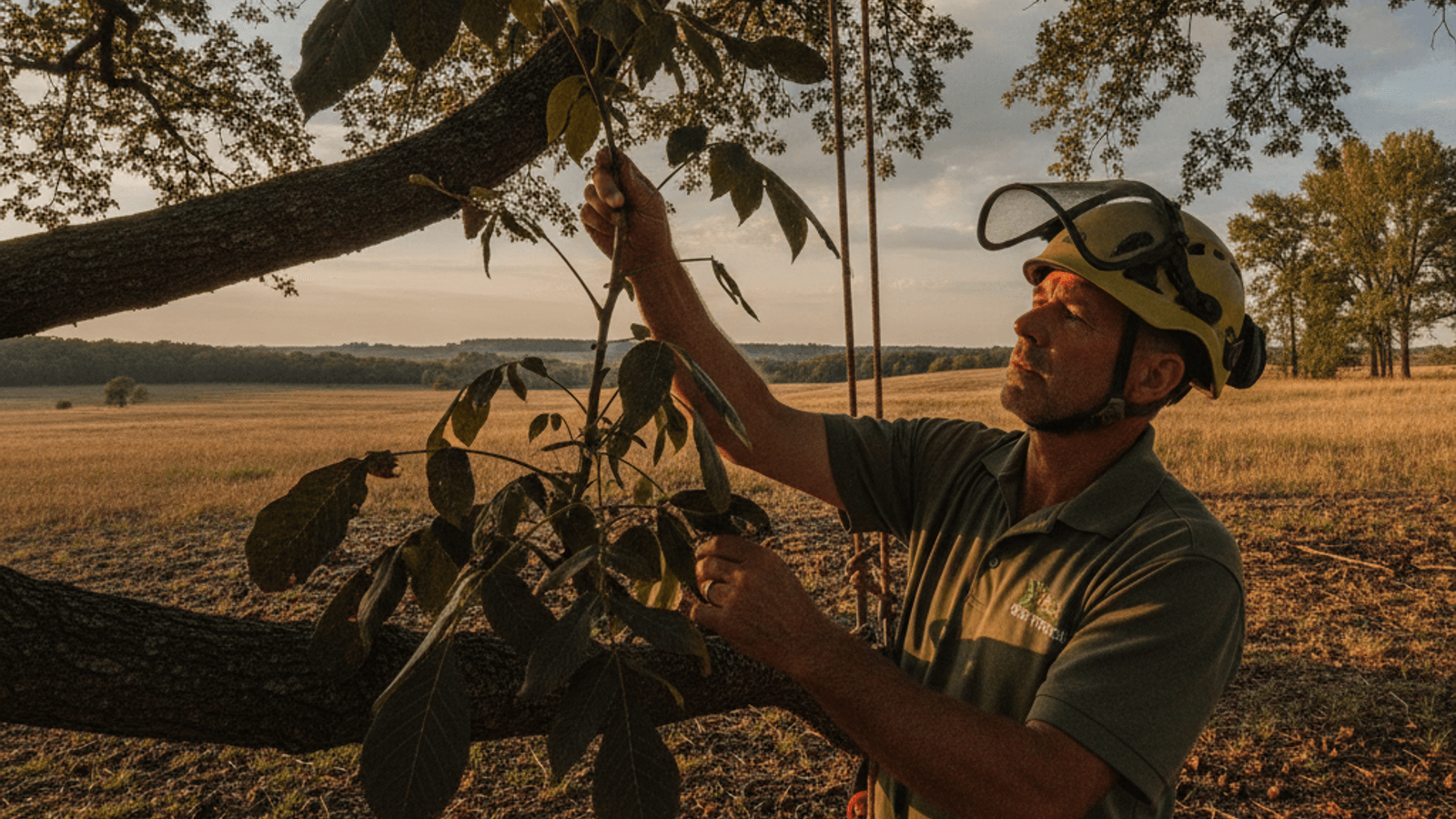
Black walnut is native to the eastern half of Kansas. Whether a walnut tree should stay, be pruned, or be removed depends on its actual condition, growing site, available space, and the owner’s landscape goals. Its species name or neighborhood does not settle that decision.
If you’ve inherited a walnut tree, or you’re thinking about planting one, here’s what actually matters about walnut trees in Greater Topeka.
Why walnut trees matter in Kansas
The Kansas Forest Service identifies black walnut as native to the eastern half of Kansas. It prefers deep, fertile, well-drained soils, while growth on upland sites can be restricted. Native status does not prove that every Topeka property provides suitable soil, drainage, moisture, or space.
Black walnut has documented timber uses, but that does not establish a buyer or salvage value for a yard tree. It also does not show that wood proceeds will offset removal costs. Some owners value the tree’s appearance and shade, but those preferences should be weighed separately from unsupported assumptions about its sale value.
That said, a walnut tree in a Topeka residential yard is not the same as a walnut in a forest. The tree’s characteristics that make it valuable in nature can make it challenging in a landscape where you’re managing it alongside a home, a driveway, and neighbors’ yards.
What makes walnut trees complicated
Plant compatibility. Black walnut tissues contain juglone, but poor plant growth beneath one tree should not be assigned to a single cause without assessment. Shade, soil, drainage, moisture, root competition, and the neighboring plant species can also affect results. Identify the struggling plant and evaluate the site before changing the tree or landscape plan.
The practical approach is to treat planting beneath a walnut as a site-specific decision. Ask a qualified nursery or tree professional about the proposed plants and actual growing conditions rather than assuming every planting will fail inside the drip line.
Messy cleanup. Walnuts produce a lot of fruit. The nuts arrive in hard green hulls that don’t open neatly. They drop throughout the fall, and if you have a driveway, sidewalk, or lawn below the tree, you’ll be dealing with walnut hulls rolling around, staining concrete black if you’re not careful, and creating a persistent cleanup job. Squirrels and other wildlife are attracted to the fallen walnuts, which can create additional mess and activity in the yard.
Roots and structure. Root extent, trunk form, and branch attachments need to be evaluated on the individual tree. Soil, drainage, moisture, past disturbance, and available rooting space all belong in that assessment. Do not infer a hidden root problem or required pruning program from the species alone.
Where walnuts work in Greater Topeka
A walnut tree belongs on property where you have:
Space. Compare the tree’s present canopy, roots, and expected mature form with buildings, drives, utilities, property lines, and usable yard space. Have the actual site assessed instead of applying a fixed size or shade percentage to every walnut.
Landscape compatibility. Consider the plants you want to grow, the available light and moisture, soil conditions, and root competition. A disappointing planting beneath one walnut does not prove that every traditional garden will fail there.
Willingness to manage cleanup. If you’re prepared for annual walnut hull cleanup and you don’t mind the staining and the work, a walnut can work. If walnut staining on your driveway or the annual nut drop drives you to frustration, the tree probably isn’t the right fit.
A long-term perspective. Black walnut growth and longevity depend on the site and the individual tree. Deep, fertile, well-drained soil is more favorable than a restricted upland site. Plan around the tree’s expected mature form without assigning it a fixed growth rate, lifespan, or age from appearance alone.
When a walnut tree should come down
Suspected disease or structural damage requires an assessment before choosing tree removal. Similar symptoms can have different causes, and a lean or visible canopy change does not diagnose the underlying condition by itself. Keep people away from hanging branches or an unstable damaged tree while professional help is arranged.
A walnut may also conflict with the owner’s use of the property even when removal is not driven by a confirmed disease. Consider structures, access, desired plantings, cleanup, and the intended use of the space. If removal is considered, ask what the written quote includes for cutting, hauling, stump work, and site cleanup. Timber uses do not guarantee a buyer or a removal-cost offset for a yard tree.
When a walnut shares limited space with other plants or has storm damage, assess the actual branches, trunk, roots, and site before selecting pruning or removal. Unchanged damage does not prove stability, and one damaged limb does not establish the condition of the entire tree.
Pruning and structure matter
If you’re keeping a walnut, base tree trimming on the individual tree’s branch structure, condition, clearance needs, and intended result. Ask the provider to identify the proposed cuts and explain what each cut is meant to address. Pruning cannot guarantee that a tree will withstand wind or ice.
K-State pruning guidance generally places deciduous-tree pruning before bud break, from late February through April. Dead, broken, or hazardous limbs require separate judgment. Confirm timing for the actual tree rather than relying on an unsupported local pest schedule.
Walnut alternatives if you like the look
If a walnut does not fit the site, compare alternatives by mature shape, available space, soil, drainage, moisture, light, and maintenance goals. A different species may solve one concern while creating another, so avoid choosing solely for a similar canopy or native label.
When to call a professional
A tree health assessment can help when a mature walnut’s condition or fit is uncertain. Topeka Tree Pro can connect you with an independent insured tree-service provider. Ask that provider to assess the tree, access, obstacles, intended result, qualifications, and written scope.
Before planting a walnut, evaluate soil, drainage, moisture, light, mature form, and nearby landscape goals. A nursery or qualified tree professional can help compare species for the actual site. Do not assume a future timber buyer, treatment result, or fixed lifespan.
Frequently asked questions
Are black walnut trees native to Kansas?
Yes. The Kansas Forest Service identifies black walnut as native to the eastern half of Kansas. Suitability for one property still depends on soil, drainage, moisture, light, and available space.
Do walnut trees stain concrete?
They can. Fallen walnut hulls may discolor hard surfaces, but the extent depends on where the fruit lands and how the area is maintained. Inspect the actual placement before treating staining as certain.
Can you plant under a walnut tree?
Planting may be possible, but results depend on the plant, shade, soil, drainage, moisture, and root competition. Poor growth beneath a walnut should not be attributed to juglone alone without evaluating those conditions.
How fast do walnut trees grow?
Growth depends on the site. The Kansas Forest Service says black walnut prefers deep, fertile, well-drained soils, while growth on upland sites can be restricted. An inspection cannot assign a dependable annual rate without measurements over time.
If you have a walnut tree in your Topeka yard, call Topeka Tree Pro at (785) 333-4052 to request an estimate. We connect Greater Topeka homeowners with independent insured tree-service providers. Verify the provider’s availability, qualifications, insurance, assessment, written scope, and any estimate or visit fees directly.