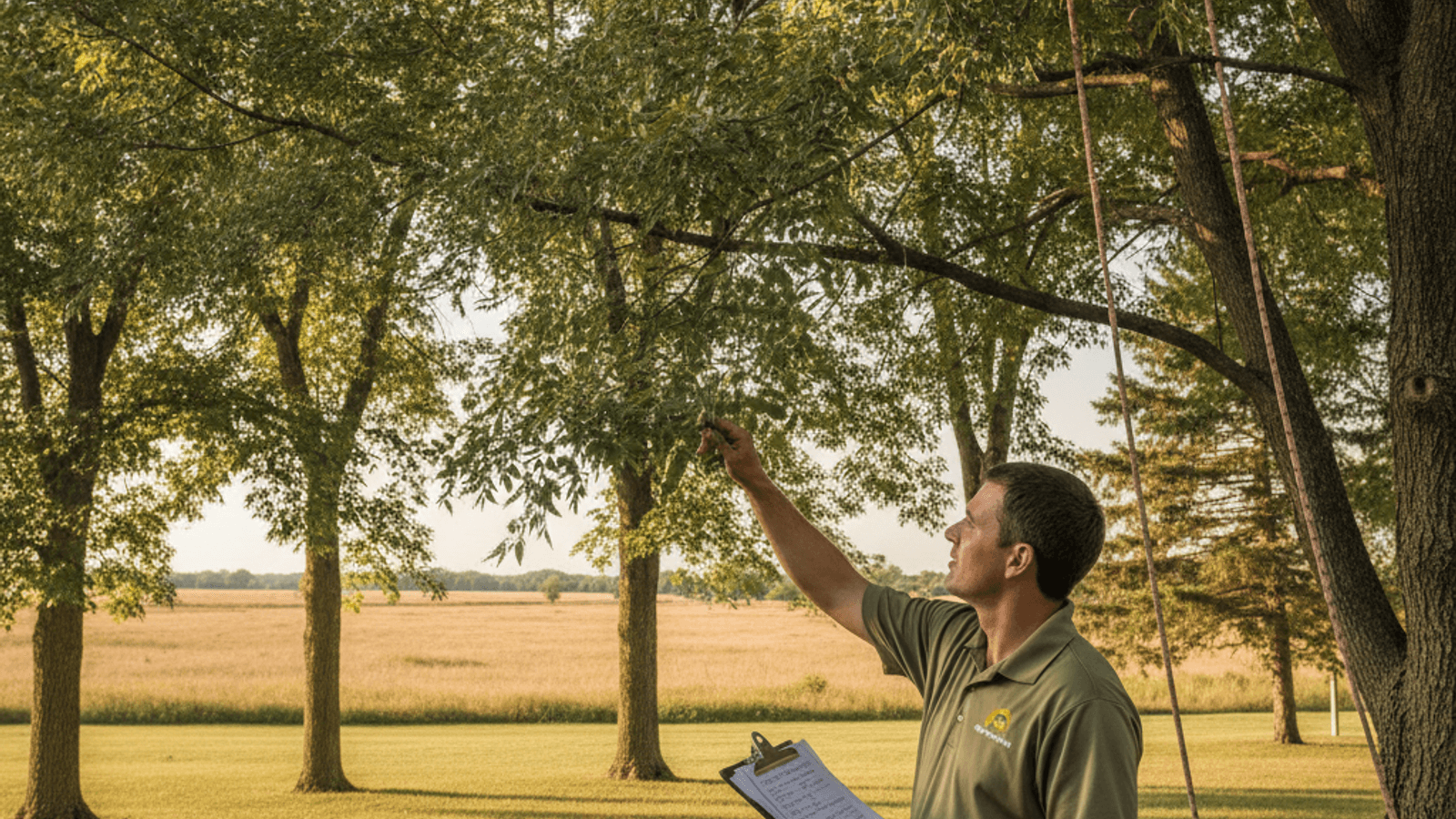
Ash trees grow well in Topeka and the Greater Topeka area, but emerald ash borer has become a serious threat to the species. Before planting a new ash or deciding whether to keep an existing one, understand the pest pressure, available varieties, and what monitoring or treatment would actually accomplish.
Why ash trees matter in Topeka
Ash trees are valued shade trees across Kansas. They establish relatively quickly, tolerate a range of soil and moisture conditions, and can reach impressive mature size. In Topeka neighborhoods, you’ll find them in yards, along streets, and sometimes as heritage trees on older properties.
Their suitability still depends on the specific site. Soil type, drainage, moisture, light, nearby obstacles, and your tolerance for ongoing pest management should all factor into a planting or retention decision. Emerald ash borer has made that decision more complicated than it used to be.
Ash tree species and varieties available in Kansas
Common ash species in Greater Topeka include white ash, green ash, and black ash. These are native or naturalized to the region and adapt well to local conditions. Each has slightly different moisture and light preferences, so match the exact species or cultivar to your site.
Nurseries sometimes offer ash cultivars selected for improved emerald ash borer tolerance. Tolerance is not immunity, and the tree’s actual survival will depend on its health, the local borer population, and whether treatment is pursued. Ask the nursery for specific cultivar information and realistic expectations before buying.
What ash trees need to establish and thrive
Ash trees in Topeka perform best when the planting site provides good drainage, adequate light, and adequate water during the first few growing seasons. Soil moisture should be consistent but not waterlogged. Compacted soil, poor drainage, or extreme shade can limit growth and stress the tree.
Before planting, observe how water moves through the proposed location after rain. A location that stays soggy or dries out rapidly may not suit ash. Allow space for the tree’s expected mature canopy and root area rather than judging available space by the size of a young sapling.
Consider irrigation or mulching during establishment, particularly during hot, dry Topeka summers. A tree that arrives stressed is more vulnerable to pests and disease.
Emerald ash borer: the pest that changed ash management
Emerald ash borer is present in Shawnee County and has killed millions of ash trees across North America. It’s established in the Topeka area, so any ash tree is at risk. The pest’s larva tunnels under the bark, disrupting water and nutrient movement. Infested trees typically decline and die within 2 to 5 years if left untreated.
Early signs include thinning canopy, dead branches starting at the crown, and D-shaped exit holes in the bark. These symptoms don’t appear until the pest population is already established. By the time canopy dieback is obvious, the tree has sustained serious damage.
Should you treat or remove an ash tree?
Treatment is an option for ash trees you want to keep, but it requires:
- An ash tree with a canopy that’s still at least 50% healthy
- Commitment to repeated trunk-injection treatments, typically annual or every two years
- Realistic expectations: treatment manages the pest but doesn’t eradicate it locally
Removal is the appropriate choice when an ash is already heavily infested, has declined significantly, or when treatment costs don’t align with the tree’s value to the property. A tree health assessment can help clarify whether treatment or removal makes sense for your specific tree.
When should an ash tree be pruned?
Routine pruning follows the same K-State guidance as other deciduous trees: late February through April, before bud break. Dead or diseased wood can be removed any time, particularly if emerald ash borer is suspected.
If an ash shows canopy dieback, crossing limbs, or storm damage, request a tree health assessment before scheduling tree trimming. Decline has multiple possible causes, so in-person inspection beats diagnosing from one symptom or photograph.
Dead branches in the canopy can be a sign of borer activity, but they can also reflect drought stress, root damage, or past storm injury. An assessment will clarify what you’re looking at and which pruning approach makes sense.
Ash tree care through the seasons
Spring. Check the canopy as buds emerge. Watch for thin foliage or branches that don’t leaf out. If you suspect emerald ash borer, document the pattern and request an assessment before symptoms spread.
Summer. Keep an eye on moisture during hot, dry weather, particularly for younger trees. Stress from drought makes trees more susceptible to borer infestation. Mulch around the base to retain moisture.
Fall. Don’t assume browning is natural fall color. Unusually early leaf loss or scattered dieback can indicate pest or disease problems. Take photos and document location.
Winter. This is the best time to inspect the trunk for D-shaped exit holes or to do structural pruning. Emerald ash borer larvae are typically in the bark during dormancy.
Should you plant a new ash in Topeka?
You can plant ash, but approach it with clear expectations. A new ash will establish faster and establish healthier than a stressed existing tree, but emerald ash borer will still be a long-term concern. Consider whether you’re willing to monitor for pest activity and commit to treatment if needed. If not, choose a different species.
Ash varieties selected for improved borer tolerance reduce risk somewhat, but they aren’t a guarantee. A healthy, well-established tree is more resilient than a stressed one, so invest in proper planting and early care.
Should a declining ash be kept or removed?
The answer depends on the tree’s current health, borer status, location, and your goals. A tree with early borer signs but a healthy canopy might respond well to treatment. A tree that’s already heavily infested with significant canopy loss is usually better removed.
Ask a provider to inspect the actual tree, explain what was observed, and compare your options. Get the proposed scope in writing, including whether it covers removal, stump work, hauling, cleanup, and any follow-up related to pest management or new planting.
When to call for ash tree help
Consider a tree health assessment when you notice canopy dieback, D-shaped exit holes, thinning foliage, or you’re uncertain whether an ash is in early decline or just dormant. Early detection can help determine whether treatment is still viable.
If an ash is already heavily infested or has lost most of its canopy, removal and site cleanup may be the clearest path forward. Call (785) 333-4052 to discuss the ash tree on your property and get connected with an independent insured provider who can inspect it and explain your options.
Is emerald ash borer in Topeka?
Yes, it’s established in Shawnee County and Greater Topeka. Any ash tree in the area is potentially at risk.
Can I save my ash tree?
Possibly, if borer activity is caught early and treatment is pursued. Trees with significant canopy loss are unlikely to recover fully, and treatment costs can be substantial over multiple years.
What’s the best ash variety for Topeka?
Species like white ash and green ash adapt well to local conditions. Some cultivars are selected for improved borer tolerance. Ask a nursery for specific recommendations for your site rather than choosing by name alone.
How often do ash trees need to be treated?
Trunk-injection treatment for emerald ash borer is typically done annually or every two years, depending on the product, tree size, and borer pressure. Your provider can advise the appropriate schedule.
What should I do if I see D-shaped holes in my ash?
Document the location and number of holes, take photos, and request a tree health assessment. Early treatment can help slow decline, but heavily infested trees may be candidates for removal.
Can ash roots damage my foundation?
Ash roots spread widely but don’t typically target foundations. If an ash is growing near a foundation, monitor for root growth and ensure drainage remains good. Proper pruning and structural management can reduce risk.