When you need a tree down, the right crew makes all the difference between a job done safely and efficiently and one that creates headaches. But finding a trustworthy tree removal company in the Greater Topeka area isn’t always straightforward when you’re looking at a few quotes and trying to figure out which one to trust. Here’s what actually matters when you’re evaluating companies and why it matters.
Credentials to verify first
Ask each provider for current proof of insurance and any qualifications relevant to the proposed tree removal. Verify important credentials with the issuing organization rather than relying on a logo or verbal claim.
Ask who will assess the tree, who will perform the work, and what qualifications those people hold. Credential needs can vary with the job, so don’t assume every company structure or title means the same thing.
The provider should also explain whether any permission or utility coordination applies. Confirm government requirements with the responsible agency when necessary. A company’s prior work nearby doesn’t prove that the same rules or conditions apply to your property.
How to spot a realistic bid
A removal quote should break down what’s being done clearly: the actual tree removal and sectioning, brush chipping and removal, stump grinding (if you want it), site cleanup, and anything else specific to your situation. A one-line total doesn’t show whether hauling, stump work, cleanup, or other tasks are included. Ask for a written quote that defines the work, exclusions, payment terms, and how approved changes will be handled.
Compare quotes by scope rather than total alone. Differences may reflect access, obstacles, tree condition, disposal choices, stump work, or the intended result. Ask each provider to explain those differences instead of guessing why one estimate is higher or lower.
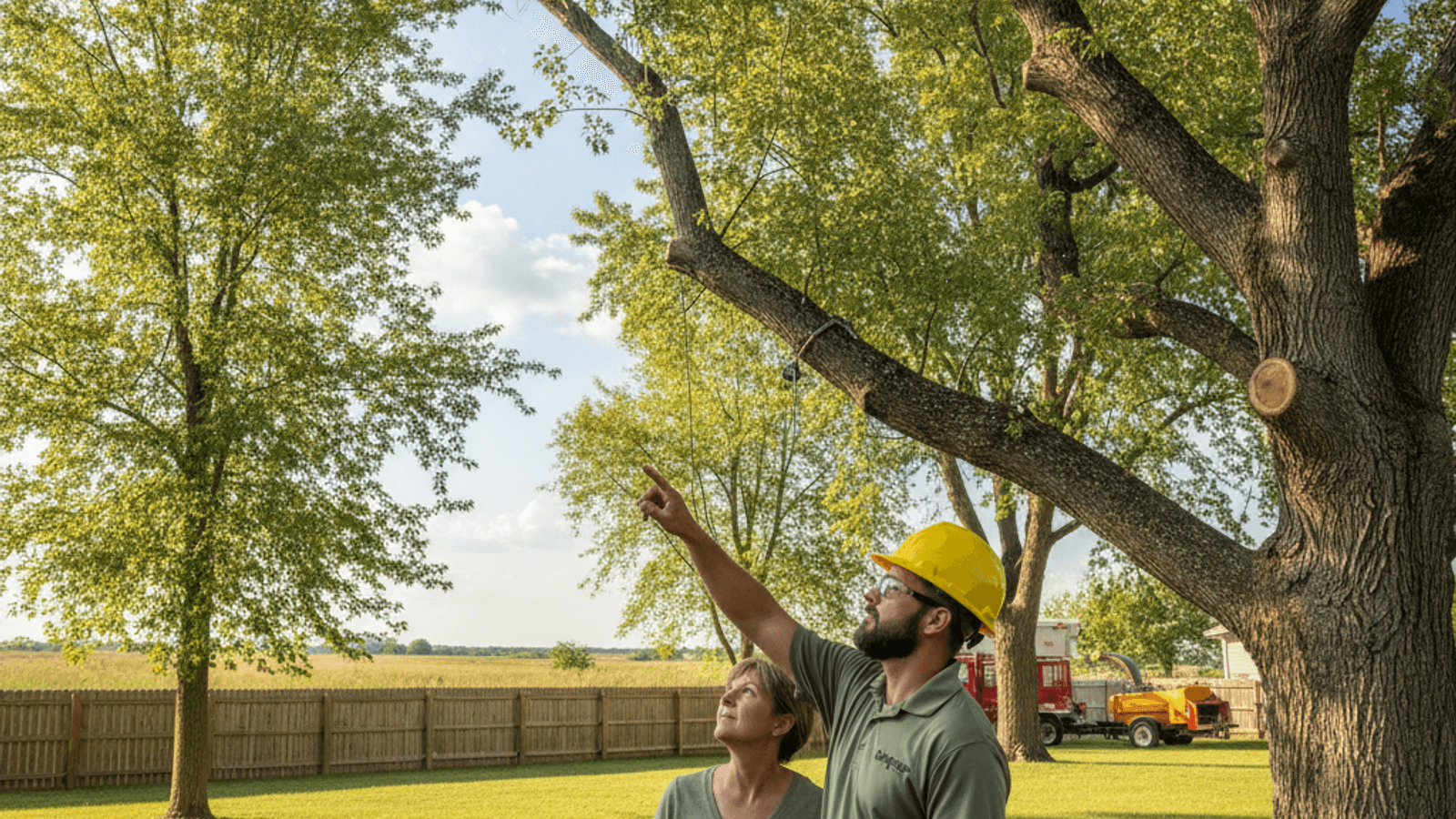
Ask the provider to assess the actual site before you accept a final quote. Access, nearby structures, fences, utilities, tree condition, obstacles, and your intended result can all change the work. The written estimate should reflect what the provider observed and clearly state what is included.
What to ask before you hire
Ask how long the provider has operated, then verify the answer if it affects your decision. Experience can be relevant, but a business age or local address doesn’t prove how it will handle your job.
Find out who will supervise the work and who can approve changes. Ask how the provider communicates if site conditions, equipment needs, or the agreed scope changes after work begins.
Discuss scheduling and weather contingencies before signing. Treat any timing as the provider’s estimate, not a guarantee, and ask how delays or unfinished work will be documented.
Verify their plan for cleanup. Where is all the wood and brush going? Is it being chipped on site, hauled to a landfill, or left as brush piles? Will they rake the yard and haul away loose debris, or is that your job afterward? A crew should be clear about when the job is considered finished and the site is cleaned up.
Red flags that mean keep looking
Don’t proceed when a provider refuses to supply requested proof of insurance. Verify the document and ask questions about coverage directly instead of accepting an unsupported verbal assurance.
Treat a quote prepared without a full site assessment as preliminary. Before agreeing to the work, ask the provider to inspect the tree, access, obstacles, nearby property, and your intended result, then confirm the scope in writing.
Review the payment schedule before signing. Ask what any deposit covers, when later payments become due, and what happens if the scope or schedule changes. Don’t rely on a supposed standard percentage because terms vary by provider and project.
Ask for references or other independently verifiable evidence relevant to similar work. Respect customer privacy, and don’t treat neighborhood familiarity alone as proof that a provider is qualified for your tree.
Finding a crew that does emergency tree service
If storm damage involves a downed power line, hanging branch, or unstable tree, stay clear of the area. Electrical hazards belong with the utility, and dangerous tree damage needs professional assessment. Don’t cut branches under tension.
Ask providers about current availability, but don’t assume a particular arrival time. Describe what you can observe without treating a phone conversation as a diagnosis. Ask for a written estimate that explains any emergency-related work and charges before authorizing non-immediate work.
Comparing contractors in your area
Company size doesn’t establish whether a provider fits your job. Compare the proposed scope, insurance, relevant qualifications, supervision, communication, cleanup, and payment terms.
Notice whether the provider answers material questions clearly and records important commitments in writing. Professional conversation is useful, but verify credentials and contract terms rather than predicting job quality from a phone call alone.
Frequently asked questions
How do I verify a tree removal provider’s qualifications?
Ask for proof of insurance and any credentials relevant to the proposed work. Verify important documents with their issuers and confirm applicable government requirements with the responsible agency.
Should I get multiple tree removal quotes?
Get enough written quotes to compare scope and terms confidently. Check removal, hauling, cleanup, stump work, exclusions, payment terms, insurance, and qualifications rather than comparing totals alone.
What’s a reasonable timeline for tree removal?
The provider must estimate it from the actual tree and site. Access, obstacles, condition, equipment needs, utility hazards, weather, and the agreed scope can change the schedule. Ask how delays will be communicated.
Can the price change after work starts?
Only approve a change after the provider explains the new condition, revised work, and cost in writing. The original agreement should explain how change orders are handled.