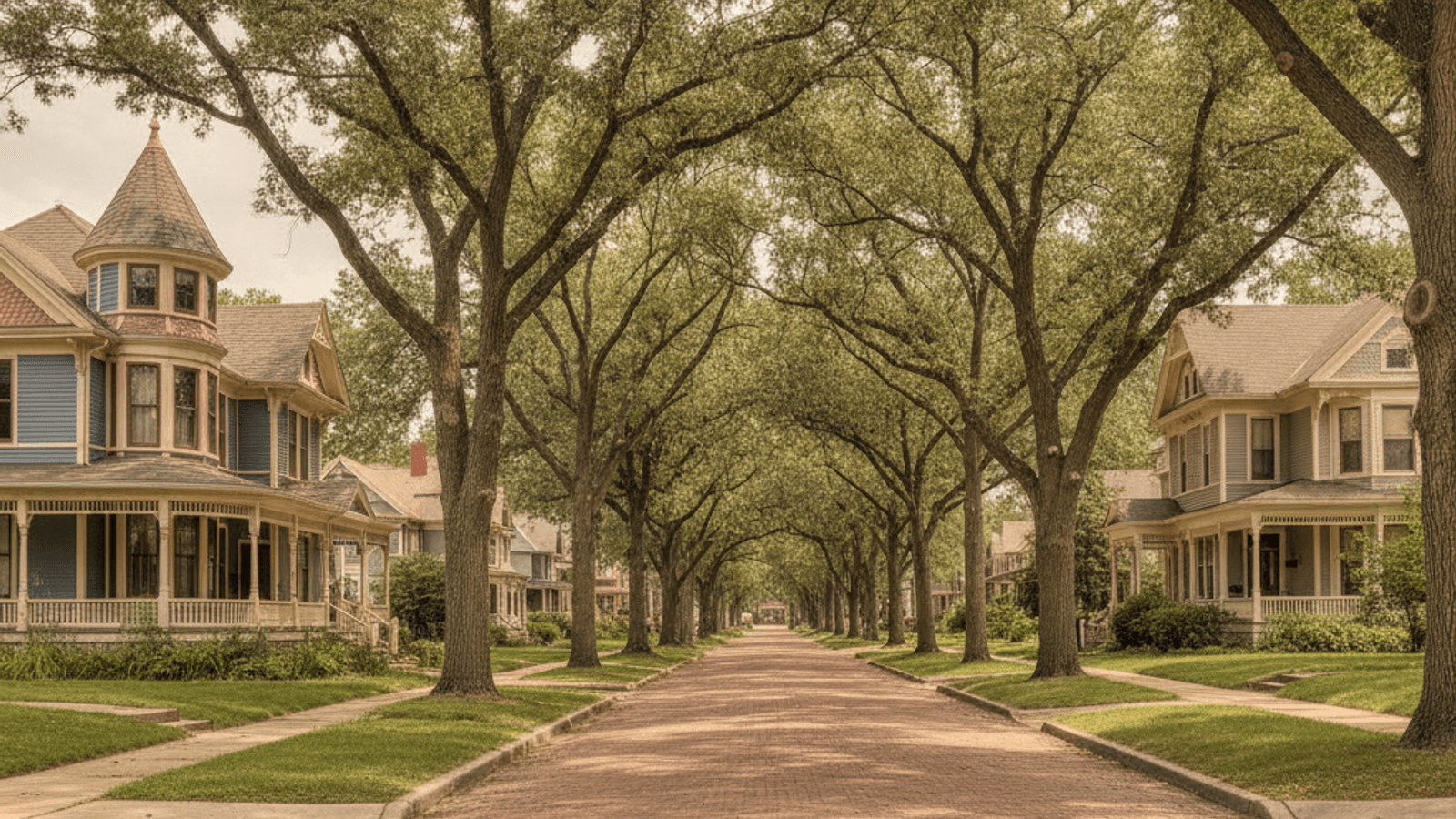
Historic district tree removal in Topeka depends on the property, the tree’s location, and whether the broader project requires City action. Historic status alone doesn’t answer the question. Confirm the parcel, right-of-way boundary, related construction, and current City requirements before scheduling work.
Do you need historic district approval for tree removal in Topeka?
Start by asking whether the proposed tree removal on private property involves a listed property, City right-of-way, local designation, or another permitted project. The cited state law explains the review framework, but the City must apply it to the specific work.
K.S.A. 75-2724 puts the duty on government, not on you:
“The state or any political subdivision of the state, or any instrumentality thereof, shall not undertake any project which will damage or destroy any historic property included in the national register of historic places or the state register of historic places until the state historic preservation officer has been given notice, as provided herein, and an opportunity to investigate and comment upon the proposed project.”
Notice is owed by the state or a political subdivision when a project “directly involves an historic property.” Nothing in that sentence tells a homeowner to notify anybody.
Topeka’s preservation review form describes review before the City issues a permit covered by the process. That makes the complete project important, including related construction or right-of-way work.
The cited materials don’t establish the answer for every private tree. Ask Planning to confirm whether the specific property and proposed work require a permit or historic review.
Our guide to ordinary Topeka tree removal permit rules explains the questions surrounding private trees and the City right-of-way. This page focuses on the additional historic-review questions to raise with Planning.
Which Topeka neighborhoods are actually historic districts?
The City’s National Register Historic Districts page states that Topeka has seven separate districts containing 435 properties:
- Potwin Place Historic District
- Holliday Park Historic District
- College Avenue Historic District
- Church of the Assumption Historic District
- Mill Block Historic District
- South Kansas Avenue Commercial Historic District
- Senate and Curtis Apartments Historic District
Potwin Place joined the National Register in 1980, commemorating its centennial anniversary. Homeowners can find neighborhood-specific service information on the Potwin tree service page.
A house doesn’t need its own individual listing to count. Topeka’s review form includes “any property that is located within a State or Nationally listed Historic District.”
That distinction matters for permitted work. A house inside a listed district can qualify even when it was never individually listed.
Westboro and Elmhurst are Neighborhood Conservation Districts. The City lists those separately from the National Register districts. Their designations shouldn’t be treated as interchangeable.
District maps determine whether a particular parcel falls inside a boundary. The Planning Department can confirm an address before work begins.
What does the historic review actually apply to?
Topeka’s Kansas Historic Preservation Law Review form provides the clearest procedural explanation:
“KSA 75-2724 requires a finding of no damage or destruction to the historic integrity of a historic property or historic district prior the issuance of a permit to conduct the work described within this application.”
The dropped word in “prior the issuance” is the City’s own, quoted here as written. The point that matters is the timing: the review happens before the permit is issued, not after the work is done.
The form also explains who conducts the review:
“The State of Kansas Historic Preservation Office has established the City of Topeka as a Certified Local Government, thus enabling the Topeka Landmarks Commission to conduct all reviews within the City of Topeka that are required under this Statute.”
The City conducts those reviews under delegated authority. Under K.S.A. 75-2724, the state historic preservation officer retains final authority.
Here is how the rule applies to common tree projects:
| Project | Question to confirm | Best next step |
|---|---|---|
| Standalone backyard tree removal | Does this property or work require City action or preservation review? | Confirm the parcel and scope with Planning |
| Tree near the sidewalk or curb | Is the tree inside City right-of-way, and what permission applies? | Confirm the boundary and process before work |
| Tree work connected to construction | Does the larger project require a permit or historic review? | Describe the complete project to Planning |
| Work inside the John Nelson district | Do local design guidelines apply to the proposed change? | Ask Planning how the guidelines apply |
Historic status isn’t a substitute for a property-specific determination. The City can confirm how the state framework and local processes apply to the proposed work.
Why being near a historic property stopped mattering in 2013
Kansas used to review projects in the surroundings of a historic property, a category the rules call the environs. That review ended in 2013.
The Kansas Historical Society states:
“As of July 1, 2013, that statute is amended to eliminate reviews of projects within the environs of historic properties.”
It immediately adds an important warning:
“The regulations cited below have not been amended to reflect the new statute.”
Some older regulatory language still mentions environs. That wording doesn’t reflect the current statute. Current review asks whether the proposed project directly involves a listed property.
The current state material distinguishes direct involvement from the former environs review. Ask Planning whether the parcel and proposed project fall within the current review process rather than deciding from proximity alone.
Is removing a tree considered demolition?
The cited Kansas regulation defines demolition around buildings, structures, their components, and man-made site components.
K.A.R. 118-3-1 lists walks, driveways, retaining walls, and fences as examples of man-made site components. The regulation doesn’t make this page a property-specific ruling about a proposed tree project.
The statute’s $25,000 figure is a maximum civil penalty tied to failing to obtain a required building or demolition permit before damaging or destroying listed historic property. It isn’t presented as a general tree-removal charge. Ask Planning whether any permit or review applies before relying on that distinction.
Where does historic status change a tree job?
Historic status matters when tree work intersects with a City permit. Two situations deserve extra attention.
A tree between the sidewalk and curb
A tree near the sidewalk or curb may be inside City right-of-way. Confirm the boundary with the City before treating it as a private tree. Ask which Forestry permission applies and whether the specific process also triggers historic review.
The available materials don’t establish one answer for every property. Give Planning the address, tree location, and complete work description before scheduling the job.
The same caution applies when tree roots are lifting a Topeka sidewalk. Right-of-way work can involve more than the tree itself.
Tree work connected to permitted construction
If tree work is connected to a driveway, retaining wall, fence, or other site work, describe the complete project to the City. Planning can determine whether a permit or historic review applies.
Include the connected tree work when asking for that determination. Separating it from the larger project could leave out information the City needs to evaluate the scope.
An arborist consultation can help define the tree work. Planning staff must still decide the historic-review question.
What about the John Nelson Historic Landmark District?
John Nelson has a separate local designation. The City says it is Topeka’s “lone registered Local Historic Landmark District.”
Its Design Review Committee page states that accompanying guidelines “must be followed for all major improvements or alterations to the properties within the District.”
That language doesn’t establish whether a particular tree removal qualifies. Homeowners in John Nelson should ask Planning before scheduling the work.
The Design Review Committee offers assistance “as requested.” A committee meeting is advisory assistance, not a substitute for the statutory review conducted by the Landmarks Commission.
Frequently asked questions
Does tree removal in Potwin require historic approval?
Planning must answer that for the specific property and project. Confirm the parcel boundary, tree location, any City right-of-way, related construction, and current permit requirements before scheduling removal.
Does a house inside a district count without its own listing?
Yes. Topeka’s review form covers “any property that is located within a State or Nationally listed Historic District,” so a house that was never individually listed still counts. Whether that matters depends on whether a permit is involved.
Are Westboro and Elmhurst National Register districts?
No. The City lists Westboro and Elmhurst as Neighborhood Conservation Districts, a separate designation from its seven National Register historic districts. Don’t treat the two lists as interchangeable when checking your address.
Is removing a tree considered demolition in Kansas?
The cited regulation defines demolition around buildings, structures, and man-made site components, with walks, driveways, retaining walls, and fences as examples. Ask the City how that definition applies to the complete project rather than treating this summary as a ruling.
Does a tree near the curb need City permission?
It may if the tree is inside City right-of-way. Confirm the property boundary and current Forestry process with the City, then ask Planning whether historic review also applies.
Is there a $25,000 fine for historic district tree removal?
The cited statute sets $25,000 as a maximum civil penalty for failing to obtain a required building or demolition permit before damaging or destroying listed historic property. It isn’t stated as a general tree-removal fine. Confirm the required approvals with Planning for the actual project.
Who can confirm the rule for my property?
Call the Topeka Planning Department at (785) 368-3728, the number printed on the City’s own review form. Staff can check whether your parcel sits inside a district and whether the permit your job needs pulls the review in.
Confirm the permit before scheduling the work
Start with Planning when a City permit, right-of-way question, or local designation may be involved. For the tree work, Topeka Tree Pro connects Greater Topeka homeowners with independent insured providers.
Request an estimate for tree removal, tree trimming, or a tree health assessment. Call (785) 333-4052 and verify availability, qualifications, permissions, and written scope directly with the matched provider.
Rules and procedures can change. Confirm current requirements with the City rather than relying on any summary, including this one.