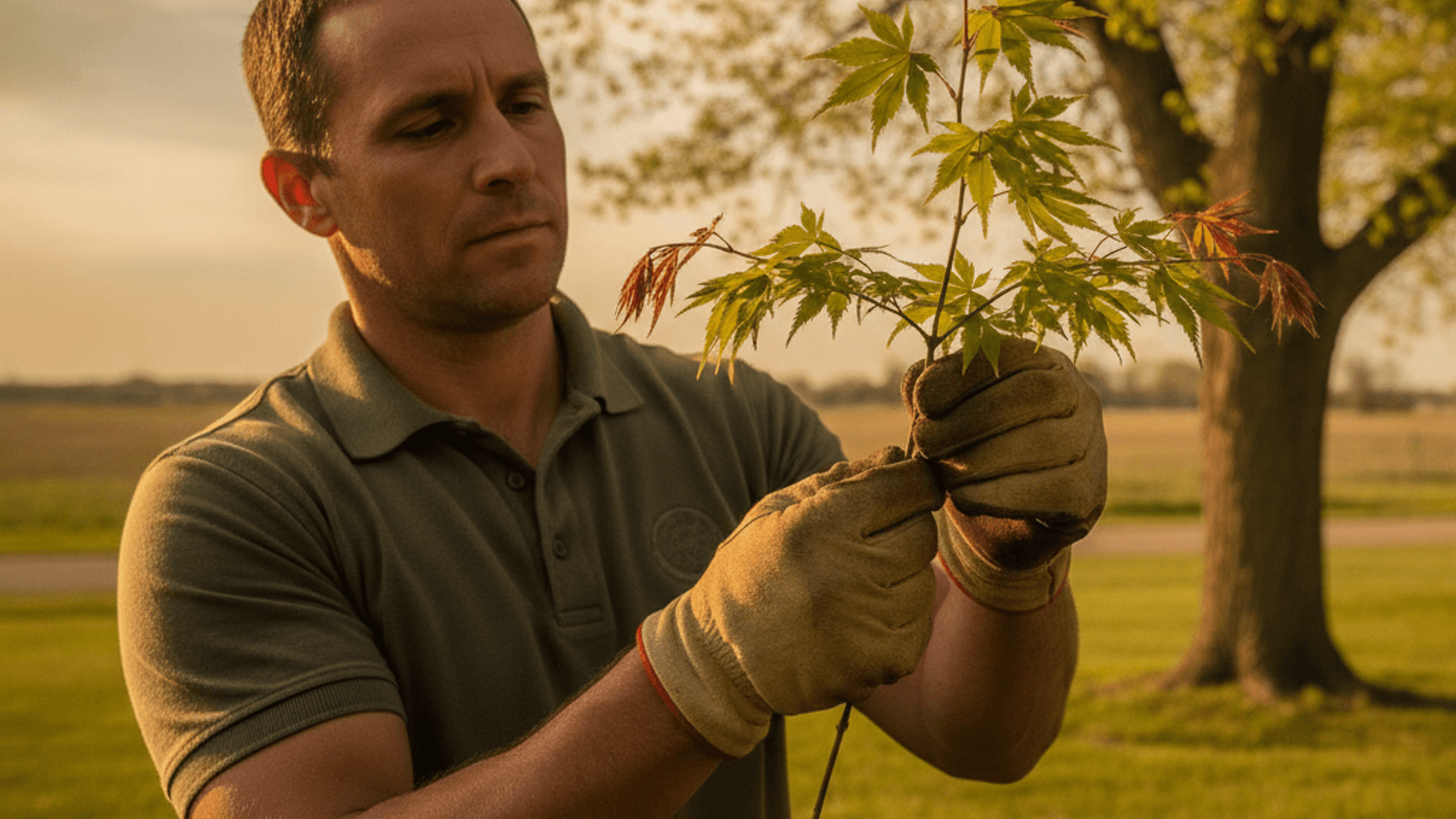
Japanese maple trees in Topeka need carefully chosen planting sites. Compare the cultivar’s mature shape and size with the yard’s sunlight, drainage, moisture, wind exposure, and available space. Morning sun, afternoon partial shade, and protection from drying winds can support a better planting decision.
Are Japanese maple trees in Topeka a practical choice?
They can be, but the cultivar and planting site must fit. A citywide climate label cannot describe the conditions around one home. Buildings, pavement, larger trees, slopes, and drainage patterns can all change the immediate growing environment.
Ask the seller for the exact cultivar name, published hardiness information, and expected mature form. Then compare those details with the available planting space. A nursery or independent tree professional can inspect uncertain site conditions before planting.
How should you evaluate light and wind exposure?
K-State’s Japanese maple guidance favors morning sunlight followed by partial afternoon shade. It also recommends shelter from drying winds.
Track the planting area’s direct sunlight during different parts of the day. Nearby buildings and trees can alter that pattern across the seasons. Watch for reflected heat and exposed locations where wind regularly dries the site.
Do not choose a location from compass direction alone. Evaluate sunlight, wind, moisture, drainage, and surrounding obstacles together.
How should soil, drainage, and moisture be checked?
Japanese maples favor slightly acidic, well-drained soil. Their roots should not remain saturated or become excessively dry. K-State also describes their roots as shallow, making protection from nearby disturbance important.
Inspect the actual planting area instead of assuming every Topeka yard has identical soil. Look at where water collects, how the ground drains, and whether construction or frequent foot traffic could disturb the root area.
Any soil preparation or watering plan should reflect the site and cultivar. Avoid applying a fixed schedule without considering rainfall, drainage, and the tree’s condition.
How much room does a Japanese maple need?
Space requirements depend on the cultivar’s mature shape and size. Some develop upright forms, while others spread or weep. The label’s mature dimensions should guide placement near buildings, walkways, fences, utilities, and other plants.
The planting decision should account for the mature tree, not its nursery size. Adequate space can reduce future conflicts and unnecessary corrective pruning.
Before digging, follow Kansas 811 homeowner guidance for public utility marking. Known or suspected private facilities may require a private locator because public utility marking does not cover private lines.
When should a Japanese maple be pruned?
Heavy Japanese maple pruning is best handled while the tree is dormant, during February or early March. K-State distinguishes that work from light pruning, which can be performed during the growing season.
This distinction matters because minor cleanup is not the same as changing the canopy’s structure. Before heavier work, identify the intended result and each proposed cut. The tree’s condition, branch structure, and nearby obstacles should shape the plan.
Dead, broken, or hazardous branches may require attention outside the preferred seasonal window. Hanging limbs, branches under tension, and unstable trees warrant professional assessment. Keep clear of downed power lines and contact the utility about electrical hazards.
Avoid topping. Structural correction or substantial limb removal should be documented in a written tree-trimming scope.
Does pruning on public property require permission?
It can. Topeka Municipal Code 12.65.030 requires a Division of Forestry permit for listed tree work on public property, including city-owned property and city rights-of-way.
Property boundaries and right-of-way limits are not always obvious. Verify the tree’s location and any required permission before pruning or removal. Ask the provider to include responsibility for permissions in the written scope.
Can one symptom identify a pest or disease?
No. Similar symptoms can arise from different causes. Leaf damage, discoloration, or decline does not establish a diagnosis by itself.
An assessment should consider soil, drainage, moisture, sunlight, wounds, root disturbance, and the pattern of damage. Both excessive and insufficient water can contribute to tree problems.
Chewed leaves can be compared with the signs in the Japanese beetle guide, but appearance alone may not confirm the cause. A tree health assessment or arborist consultation should begin with the actual tree and site.
What should you ask before hiring a provider?
Ask the provider to inspect the tree, access route, nearby obstacles, and intended result. Request a written quote that identifies the proposed work and whether hauling or cleanup is included.
Verify the provider’s availability, qualifications, insurance, and applicable licensing. If pruning could involve public property, utilities, or uncertain boundaries, ask how those issues will be handled before work begins.
Frequently asked questions
Can Japanese maple trees grow in Topeka?
They can grow in suitable locations, but success cannot be predicted from the city name alone. Compare the exact cultivar’s requirements with the yard’s sunlight, drainage, moisture, wind exposure, and available space.
How much sun does a Japanese maple need?
K-State recommends morning sunlight and partial shade during the afternoon. The site should also offer protection from drying winds. Confirm that the selected cultivar fits the property’s actual light pattern.
What soil is suitable for a Japanese maple?
Japanese maples favor slightly acidic, well-drained soil. Avoid sites where roots remain saturated or become excessively dry. Inspect the planting area’s actual drainage before choosing a tree.
When should I heavily prune a Japanese maple?
Plan heavy pruning for the dormant period in February or early March. Light pruning can occur during the growing season. Hazardous or storm-damaged branches may require separate professional assessment.
How big do Japanese maples get?
Mature size and form vary by cultivar. Check the seller’s specifications for the exact tree, then compare its expected height and spread with buildings, utilities, walkways, and nearby plants.
Will a Japanese maple survive a Topeka winter?
No one can promise survival based only on the city. Review the cultivar’s published hardiness information and assess the site’s exposure, drainage, moisture, sunlight, and wind protection.
Topeka Tree Pro connects Greater Topeka homeowners with independent licensed and insured tree-service providers. Call (785) 333-4052 to request an estimate for a site-specific assessment. Confirm the provider’s estimate or visit fees, availability, qualifications, insurance, permissions, and the written scope.