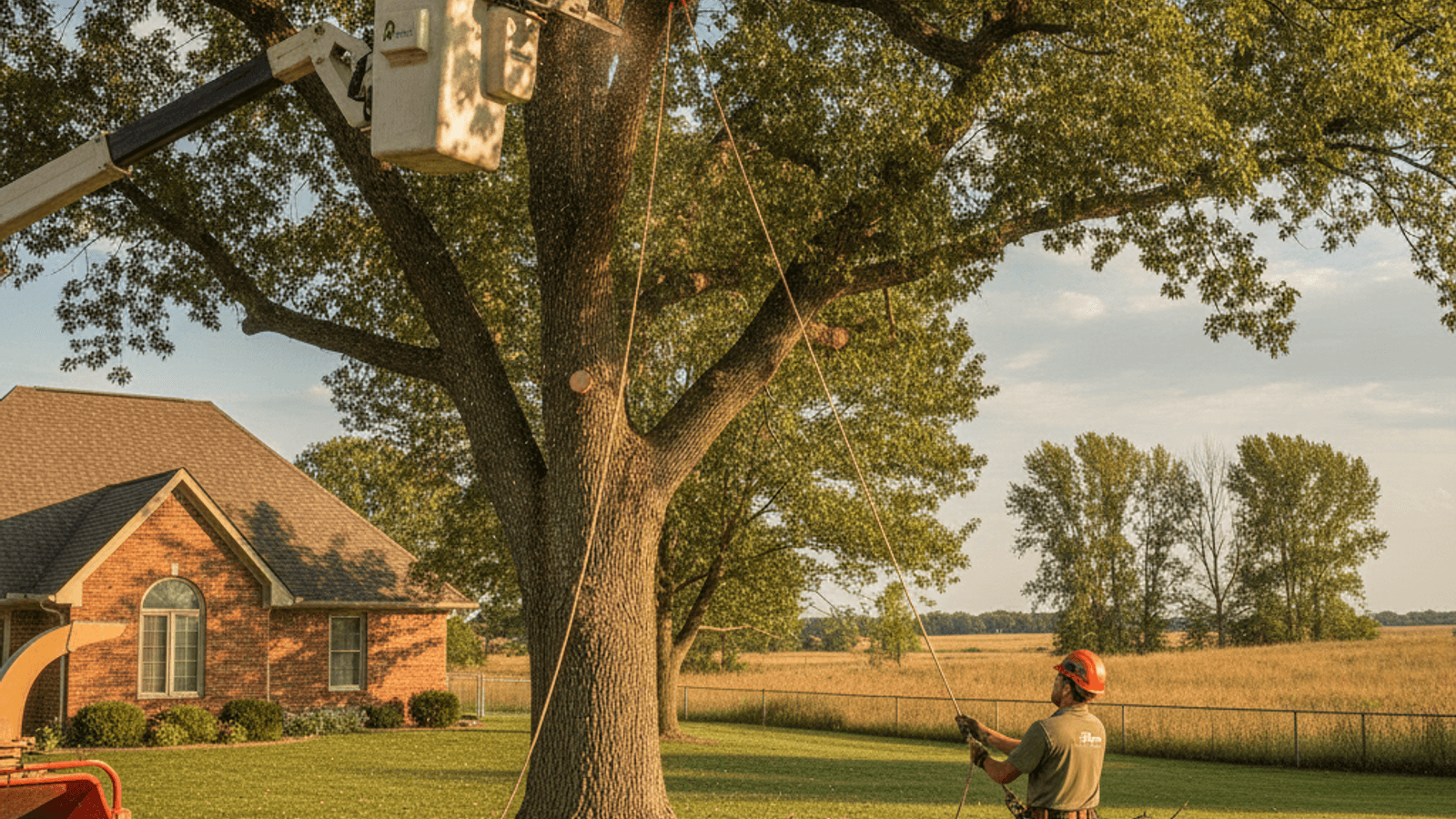
Tree trimming cost in Topeka depends on the tree’s condition, canopy, access, nearby obstacles, and requested work. A written estimate should identify the trees and branches included, explain debris handling, and list any separate follow-up work. Topeka Tree Pro connects homeowners with independent insured tree-service providers.
What actually drives tree trimming cost in Topeka
A tree trimming quote should reflect the actual tree, requested cuts, access, and nearby obstacles. Ask the provider to inspect fences, structures, neighboring property, and overhead utilities before defining the work. The estimate should describe the included pruning and any access or debris-handling charges without assuming a method from the ground.
Scope also changes the estimate. Clearance pruning, dead or broken branch removal, and structural work are different assignments. Ask which cuts the provider recommends, why they are recommended, and whether each task is included in the written quote. Do not assume combining tasks will produce a particular discount.
What does tree trimming cost by tree size in Topeka?
For a young tree, ask whether the proposed work is limited to selected structural cuts or includes clearance and cleanup elsewhere in the canopy. The tree’s actual form matters more than the age of its neighborhood. Homeowners in Southwest Topeka should have each tree assessed instead of assuming builder-planted trees need the same work.
For a mature tree, the provider should inspect branch condition, crown complexity, access, and the amount of work requested. A written quote should distinguish selected branch removal from broader structural work and identify cleanup or hauling. Species and apparent age alone do not establish a price or required treatment.
Does trimming near power lines cost more?
Electrical hazards require utility involvement. Stay clear of downed lines, hanging branches, and damaged trees near electrical equipment, and contact the utility before arranging private tree work. After the electrical hazard is addressed, ask a provider to assess any remaining pruning and access needs. Our guide to utility line clearance and private tree work explains the questions to resolve.
Why species changes the price
Species can inform pruning, but it does not determine the scope by itself. Ask the provider to explain how the individual tree’s branch attachments, dead or broken limbs, clearance needs, and current condition affect the recommendation. If a hackberry has unusual twig growth, use the hackberry guide as background and request an assessment rather than diagnosing it from appearance alone.
If cabling and bracing is proposed with trimming, ask the provider to explain the condition being addressed and list each service separately in the written scope. Several trees or several treatments require a property-specific estimate; they do not establish a reliable price without an inspection.
What’s usually included in a trimming quote
Do not assume every trimming quote includes the same tasks. Ask whether the written scope covers assessment, specified pruning cuts, brush and limb removal, low sprouts, cleanup, and any follow-up visit. Confirm how debris will be handled and which items would require separate approval before scheduling.
Also ask whether the quote covers one visit or proposes future maintenance. The appropriate interval depends on the individual tree, its condition, and the purpose of the pruning. When the concern extends beyond routine clearance or selected dead branches, request a tree health assessment before approving a larger scope.
How often trimming is needed, and why that affects total cost over time
Pruning frequency depends on species, condition, site, and the reason for the work. K-State pruning guidance generally places deciduous-tree pruning before bud break, from late February through April. Oaks are an important exception: avoid wounding or pruning them in April, May, and June. Dead, broken, or hazardous limbs require separate assessment rather than waiting for a calendar interval.
Frequently asked questions
How much does tree trimming cost in Topeka?
Tree trimming cost in Topeka depends on the tree’s condition, requested cuts, access, obstacles, and debris handling. Compare written estimates that describe the same scope, including cleanup and any excluded work.
Does trimming actually lower storm damage risk?
Pruning can address specific dead, broken, or structurally concerning branches identified during an assessment, but it cannot guarantee protection from storm damage. After a storm, stay clear of hanging branches, unstable trees, and downed power lines. Do not cut branches under tension.
How often should trees be trimmed in Topeka?
There is no single schedule for every mature shade tree. Species, condition, site, and pruning purpose affect timing. Dead, broken, or potentially hazardous branches should receive a professional assessment rather than waiting for a routine interval.
Why do silver maples need different pruning than bur oaks?
Different species develop different branch patterns, but the individual tree still needs inspection. Ask the provider to explain the branch attachments, defects, clearance needs, and pruning goals behind the proposed cuts instead of choosing a treatment from the species name alone.
Is trimming near a power line more expensive than a standalone trim?
The estimate may change with access and remaining scope, but electrical hazards come first. Contact the utility about lines or electrical equipment, stay clear of the hazard, and request a tree-work quote only for work the provider can safely assess afterward.
An accurate quote requires an assessment of the actual tree, access, obstacles, condition, and requested result. Topeka Tree Pro connects Greater Topeka homeowners with independent insured tree-service providers. Ask the matched provider to confirm availability, qualifications, insurance, written scope, and any estimate or visit fees. Call (785) 333-4052 to request an estimate.