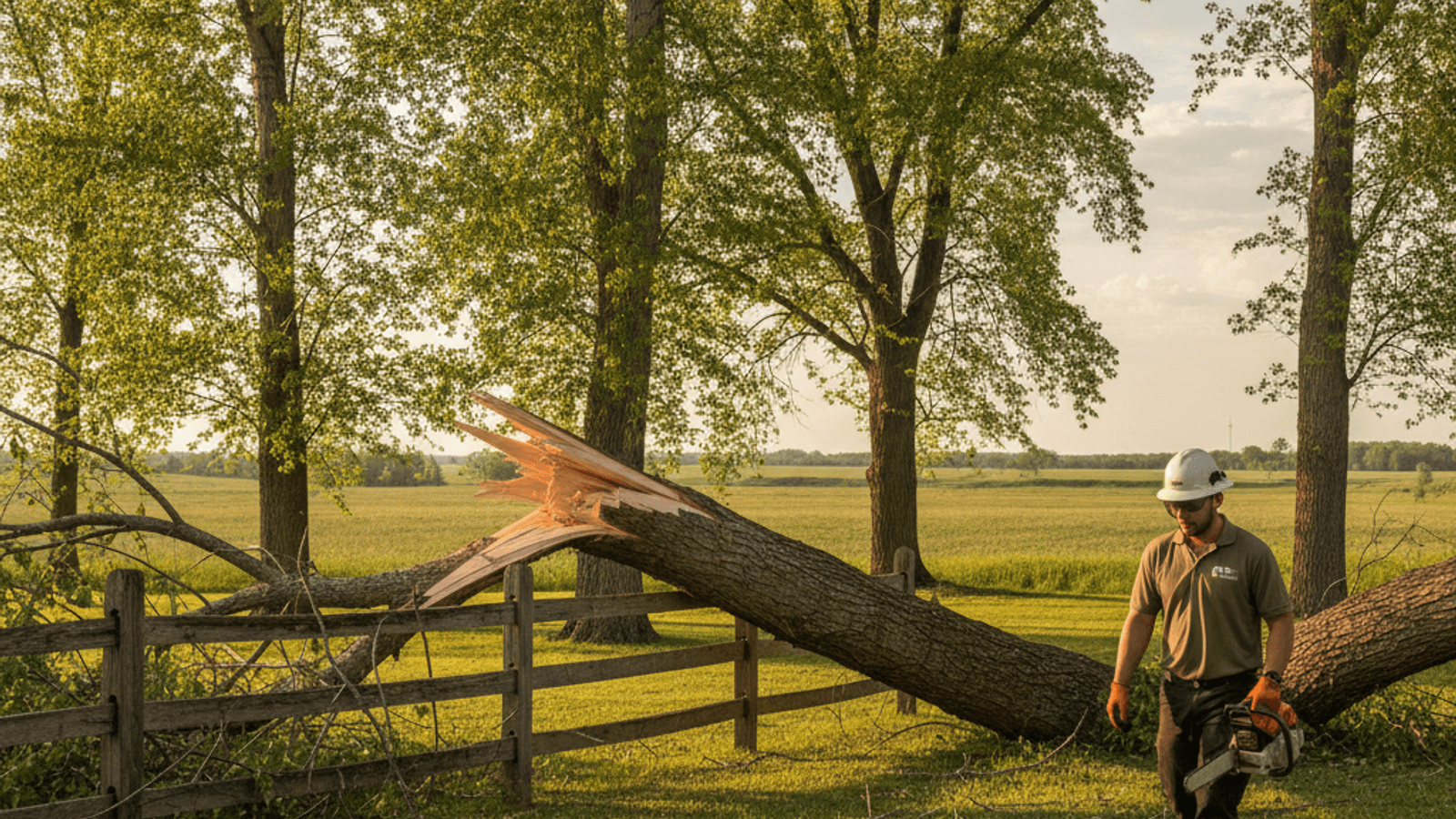
Poplar tree care in Topeka starts with identifying the species and assessing the actual tree. Structure, decay, root-zone changes, drainage, moisture, light, heat, and nearby obstacles can all affect the recommendation. A ground-level appearance can’t prove that a tree is safe or hazardous, so pruning or removal decisions should follow an on-site assessment.
Why does the poplar species matter?
“Poplar” can refer to several species and hybrids, so identification matters before pruning or removal. Growth habit, mature form, site moisture, drainage, heat, and available space can change how a tree performs.
For quaking aspen specifically, the USDA Forest Service describes rapid growth, relatively short-lived stems, wide lateral roots, poor shade tolerance, and root suckering after cutting. Those general species facts don’t identify every poplar in a Topeka yard or predict an individual tree’s condition.
What can make a poplar limb hazardous?
Species alone doesn’t establish whether a limb will fail. A provider should inspect the actual branch unions, dead or broken wood, visible cracks, decay indicators, lean, root-zone changes, and the structures or areas beneath the canopy. A defect may be hard to see from the ground, but that doesn’t make failure inevitable.
Stay clear of hanging branches and unstable damaged trees. Don’t cut branches under tension. If a tree or limb is touching or threatening an electrical line, keep away and contact the utility responsible for the electrical hazard.
When to trim poplar trees in Topeka
K-State generally places pruning for deciduous trees before bud break, from late February through April. Dead, broken, or hazardous limbs may require a different response, so don’t use the seasonal window to postpone a safety assessment.
Confirm that the tree is a poplar before applying that calendar. Evergreens, flowering shrubs, and oaks can require different timing. In particular, K-State advises avoiding oak wounding or pruning during April, May, and June.
What to trim on a poplar
Pruning scope should follow the tree’s actual structure and condition. Ask the provider to identify dead or broken wood, rubbing branches, questionable unions, clearance conflicts, and any signs that need closer diagnosis. The written scope should name the branches being addressed and the intended result.
Avoid topping. K-State notes that severe storm damage may require removal instead of aggressive pruning. Heavy limbs, hanging branches, and wood under tension require professional assessment rather than do-it-yourself cutting.
A tree health assessment can document the tree’s condition, surrounding targets, access, and site factors before you choose pruning or removal.
Storm damage and poplars
Storm damage requires an assessment of the remaining structure, not an assumption based on species or appearance. Keep people away from hanging limbs, split trunks, downed lines, and unstable trees. Unchanged damage doesn’t prove that the tree has stabilized.
Contact the utility for electrical hazards. An independent provider offering emergency tree service can assess non-electrical tree damage and explain whether pruning, temporary site control, or removal belongs in the written scope.
Severe damage may require removal, but there is no fixed number of broken limbs that decides the outcome. The provider should assess the trunk, major unions, root area, remaining canopy, targets, and intended end result.
When removal makes sense
Removal may make sense when an on-site assessment finds dangerous damage, serious structural concerns, an unsuitable location, or a conflict with the owner’s intended use of the property. Ask the provider to explain why pruning would or wouldn’t meet the intended result.
Trees near power lines require coordination with the utility responsible for electrical hazards. Don’t assume a tree-service provider can perform every part of that work or that removal is automatically required.
Stump grinding addresses the visible stump and nearby material included in the provider’s scope. It doesn’t establish that the entire connected root system is gone. Some species, including quaking aspen, can produce root suckers after a stem is cut, so ask how remaining roots and possible regrowth affect the plan.
Cost and hiring for poplar work
Poplar work can’t be priced accurately without the actual tree and site. Ask each provider to assess the tree’s condition, access, obstacles, nearby structures, hauling needs, and intended result. Compare written estimates for pruning or removal, debris handling, stump work, scheduling, and anything specifically excluded.
Verify the provider’s qualifications, insurance, and applicable licensing directly. Topeka Municipal Code 5.165.030 establishes a city-clerk licensing requirement for regulated tree businesses. Topeka Municipal Code 12.65.030 requires a Division of Forestry permit for listed tree work on public property, including city right-of-way. Ask how those rules apply to the actual location rather than assuming the work is exempt.
Frequently asked questions
How often do poplar trees need trimming?
There is no fixed trimming interval for every poplar. Inspection timing depends on the species, condition, location, prior work, nearby targets, and new damage. Arrange an assessment when you notice broken limbs, cracks, canopy changes, root-zone disturbance, or storm damage.
Are poplar trees bad for landscaping?
Not necessarily bad, just demanding. A poplar in the right location, with clear space around it and regular trimming, can be fine. A poplar planted too close to a house or where its shade conflicts with other plantings, or where nobody’s willing to trim it regularly, becomes a problem.
How fast do poplars grow?
Growth varies by species and site. The USDA describes quaking aspen as fast growing with relatively short-lived stems, but moisture, drainage, heat, light, and other site conditions affect performance. That doesn’t supply a fixed annual growth rate or lifespan for a Topeka yard tree.
What happens if I don’t trim my poplar?
Skipping an assessment can leave developing damage or structural concerns undocumented, but an untrimmed tree isn’t automatically hazardous. Have the actual canopy, trunk, unions, roots, and surrounding targets evaluated before deciding whether pruning or removal is appropriate.
Do poplars have disease problems?
Several diseases, insects, injuries, and site problems can produce similar symptoms. Soil, drainage, moisture, light, and root disturbance belong in the diagnosis. Don’t identify the cause or rank the risk from species and neighborhood alone.
Is poplar wood good for anything after removal?
Ask the provider what the written quote includes for hauling, chipping, and any wood you want left on site. If disease or insect activity is suspected, don’t keep or move the material until a qualified source confirms the appropriate handling method.
If you’re unsure whether a poplar needs pruning, assessment, or removal, Topeka Tree Pro can connect you with an independent licensed and insured tree-service provider. Ask the provider to inspect the actual tree and give you a written scope. Call (785) 333-4052 to request an estimate, and confirm estimate or visit fees and scheduling.