Safe DIY pruning for Topeka homeowners
Safe DIY pruning guidance for ground-level work, seasonal timing, damaged branches, oak trees, and electrical hazards.
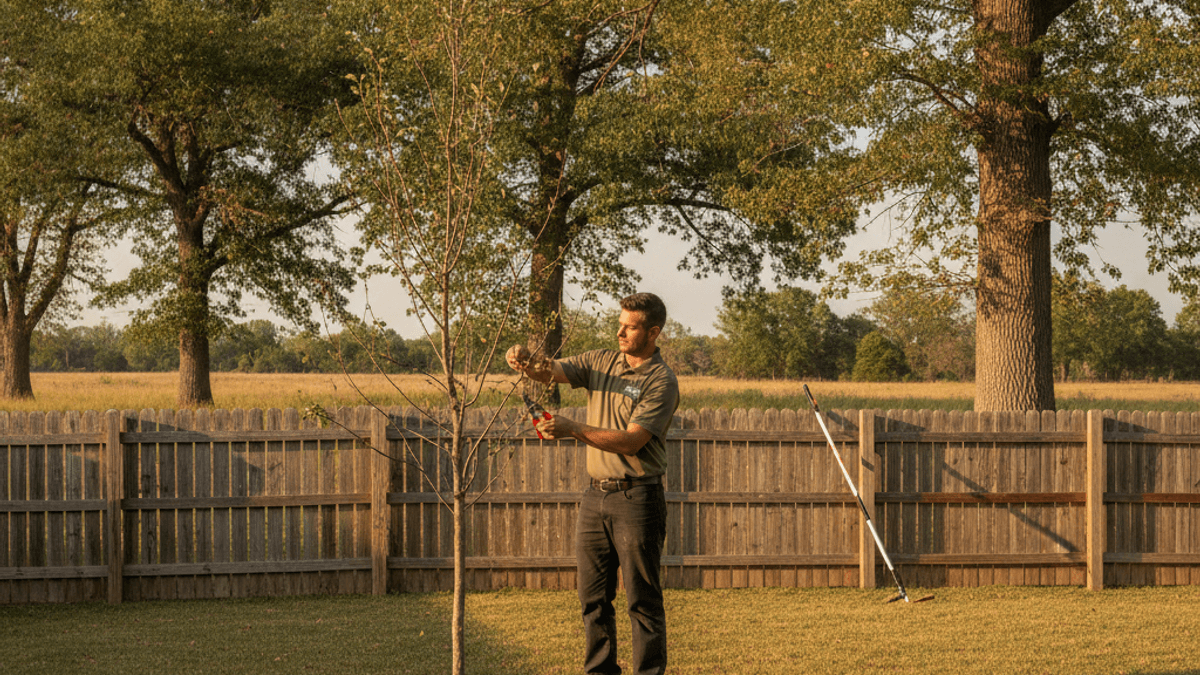
What safe DIY pruning can homeowners consider?
Safe DIY pruning is limited to work you can complete securely from the ground. Make careful cuts outside the branch collar and avoid removing major structural limbs without an assessment. Do not top a tree by cutting primary limbs back to stubs. If the branch is hanging, under tension, or difficult to control, stay clear and call a professional.
When should trees be pruned in Kansas?
Deciduous trees are generally pruned before bud break, from late February through April. Dead, broken, or hazardous limbs may require different follow-up. Evergreens and flowering shrubs have different timing needs. Avoid wounding or pruning oaks during April, May, and June. If an oak is damaged then, ask a qualified provider how to proceed.
When should pruning be left to a professional?
Call a professional when pruning requires climbing or working beneath unstable branches. Stay clear of downed power lines and branches near electrical hazards, and contact the utility. Do not cut branches under tension. Ask the provider to inspect actual access, obstacles, tree condition, and the intended result before recommending the scope of work.
Rather have a pro handle it?
Request an estimate from an independent insured tree-service provider serving Greater Topeka.
Keep reading.
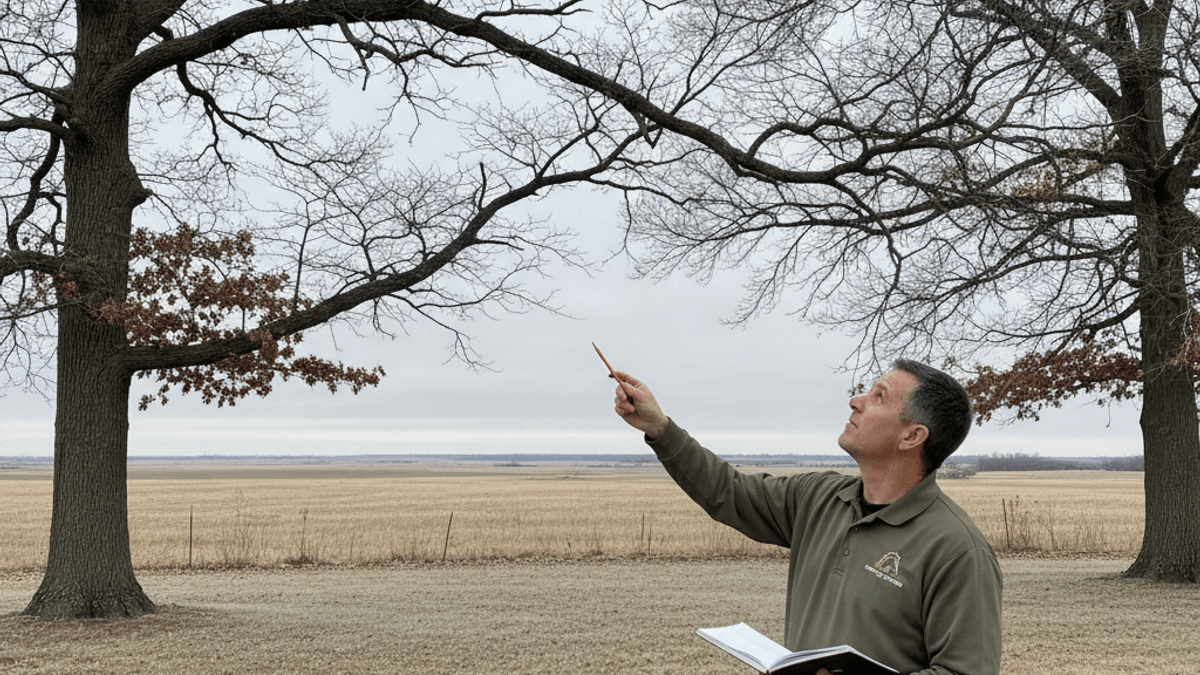
Pre-ice storm tree check for Topeka homes
A ground-level pre-ice storm tree check for damaged branches, unstable trees, nearby structures, and electrical hazards.
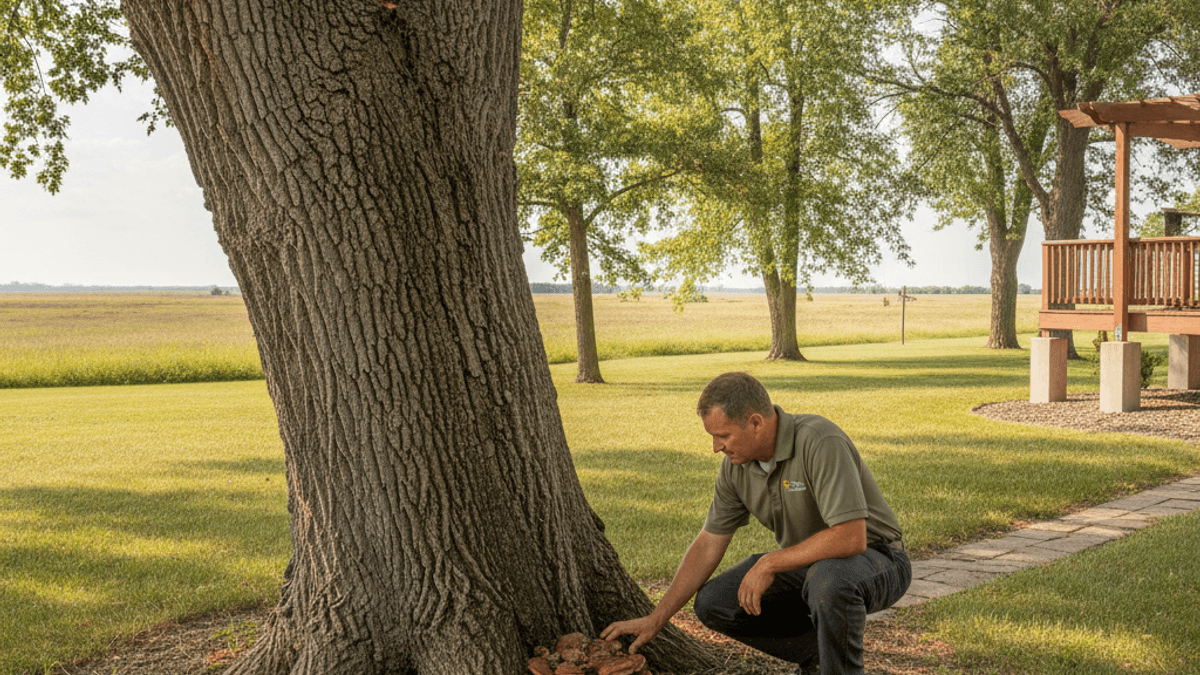
Recognizing a potential tree hazard in Topeka
Plain-English guidance for recognizing potential tree hazards without diagnosing the cause from one visible sign.
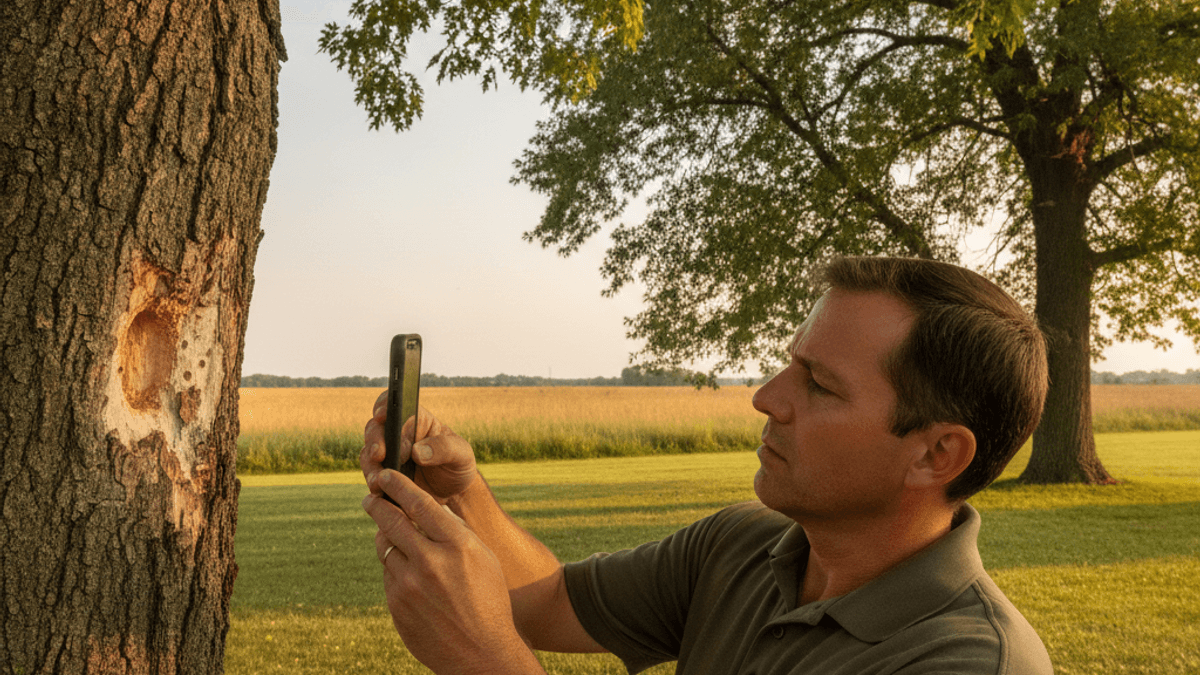
Possible emerald ash borer signs on an ash tree
Possible emerald ash borer signs to document before requesting professional identification and assessment of an ash tree.