Possible emerald ash borer signs on an ash tree
Possible emerald ash borer signs to document before requesting professional identification and assessment of an ash tree.
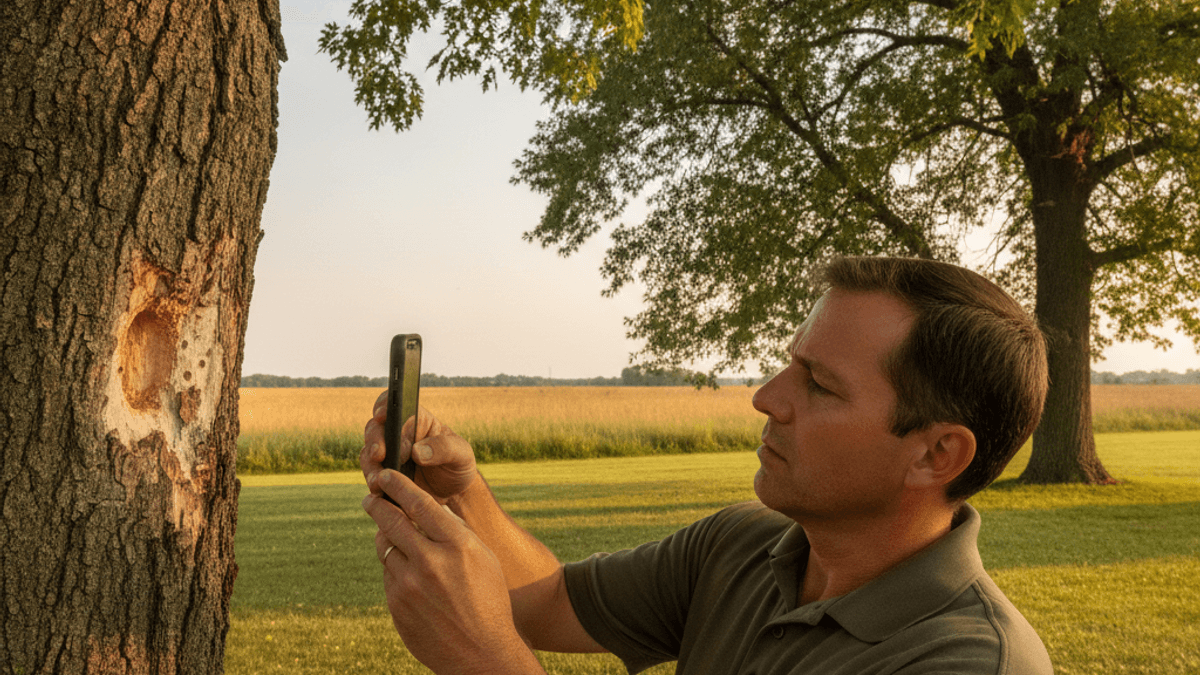
What are possible emerald ash borer signs?
Possible emerald ash borer signs can support an inspection request, but they cannot confirm an infestation. From the ground, note changes in the canopy, unusual shoots on the trunk, bark damage, or visible holes. Similar symptoms may come from several causes. First confirm that the tree is an ash, then request a professional diagnosis.
Does woodpecker activity confirm emerald ash borer?
No. Woodpecker activity and patches of lighter-looking bark can be useful observations, but they do not confirm emerald ash borer. Record where the changes appear and whether the canopy or bark has also changed. Avoid peeling bark or climbing the tree to investigate. A provider can assess the tree without relying on one sign alone.
When should you request an ash tree assessment?
Request an assessment when an ash tree shows canopy decline, bark changes, unusual holes, or increasing woodpecker activity. Ask the provider to confirm the cause before discussing treatment or removal. Tree condition, site conditions, and the intended result belong in that decision. Stay clear if the tree also has hanging branches or storm damage.
Rather have a pro handle it?
Request an estimate from an independent insured tree-service provider serving Greater Topeka.
Keep reading.
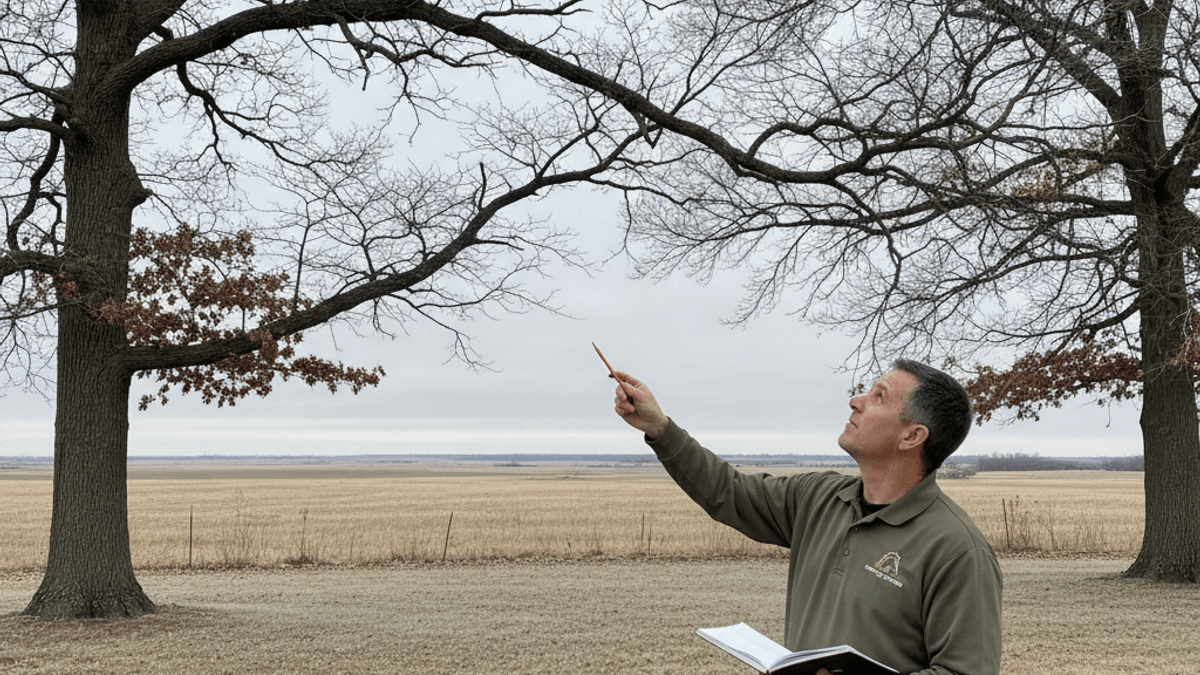
Pre-ice storm tree check for Topeka homes
A ground-level pre-ice storm tree check for damaged branches, unstable trees, nearby structures, and electrical hazards.
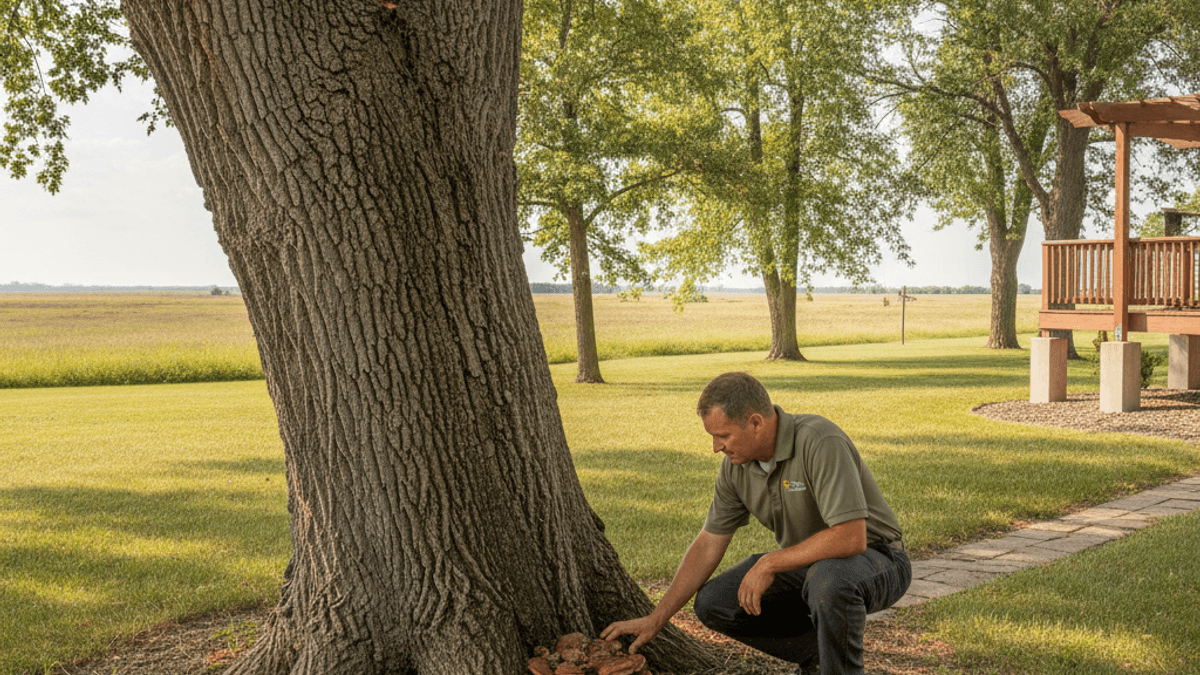
Recognizing a potential tree hazard in Topeka
Plain-English guidance for recognizing potential tree hazards without diagnosing the cause from one visible sign.
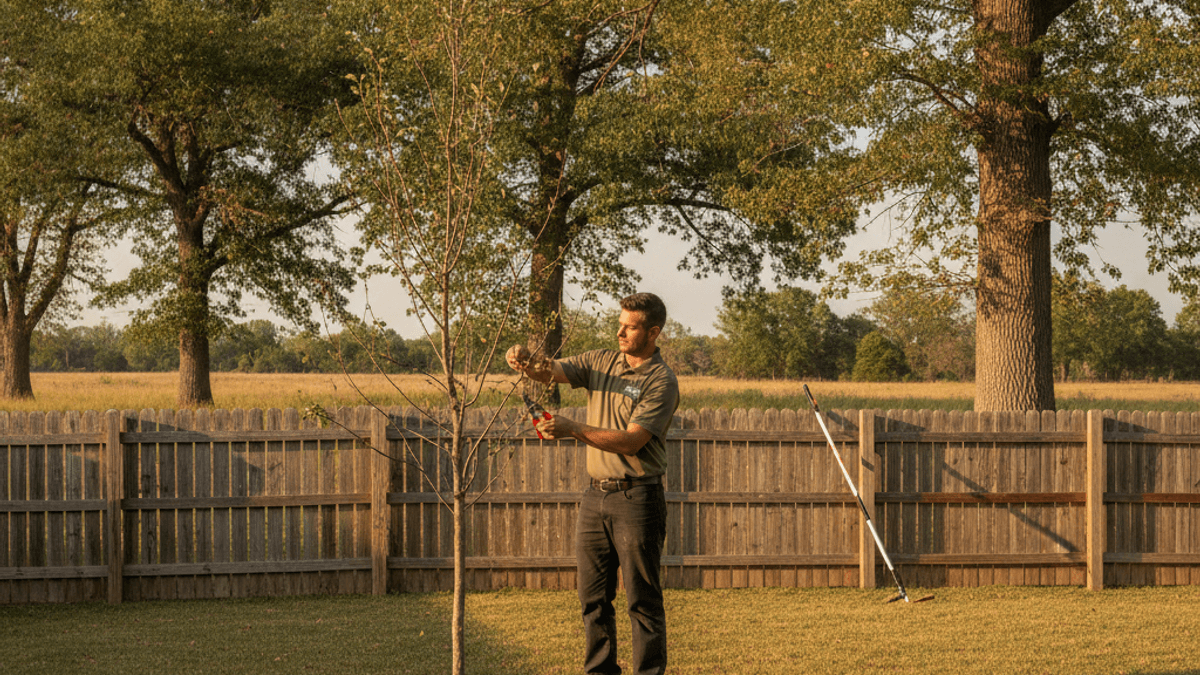
Safe DIY pruning for Topeka homeowners
Safe DIY pruning guidance for ground-level work, seasonal timing, damaged branches, oak trees, and electrical hazards.