Recognizing a potential tree hazard in Topeka
Plain-English guidance for recognizing potential tree hazards without diagnosing the cause from one visible sign.
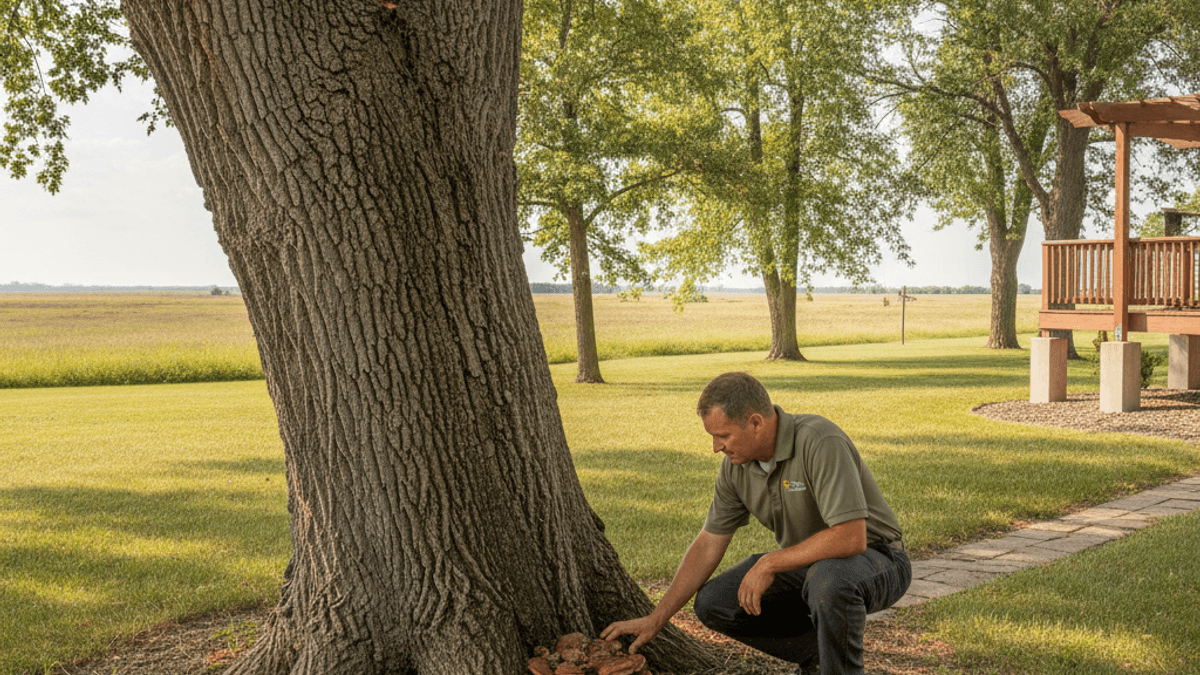
What can indicate a potential tree hazard?
Recognizing a potential tree hazard begins with changes you can safely observe from the ground. Look for broken or hanging limbs, new cracks, visible movement at the base, or a tree that changed position. Mushrooms, bark changes, and exposed roots can support an inspection request, but none confirms internal decay or a specific diagnosis by itself.
What should you notice around the canopy and base?
Compare the canopy with its earlier appearance rather than relying on presumed species alone. Note dead branches, uneven foliage loss, storm damage, or soil changes near the base. Soil, drainage, moisture, and light can all matter during diagnosis. Both excessive and insufficient water can cause problems, and similar symptoms may have different causes.
When does a tree need professional assessment?
Request professional assessment when damage could affect a home, driveway, walkway, play area, or neighboring property. Stay away from unstable trees, hanging branches, and electrical hazards. Ask the provider to evaluate the tree's condition, access, obstacles, and intended result. The inspection should guide any discussion of pruning, support, or removal.
Rather have a pro handle it?
Request an estimate from an independent insured tree-service provider serving Greater Topeka.
Keep reading.
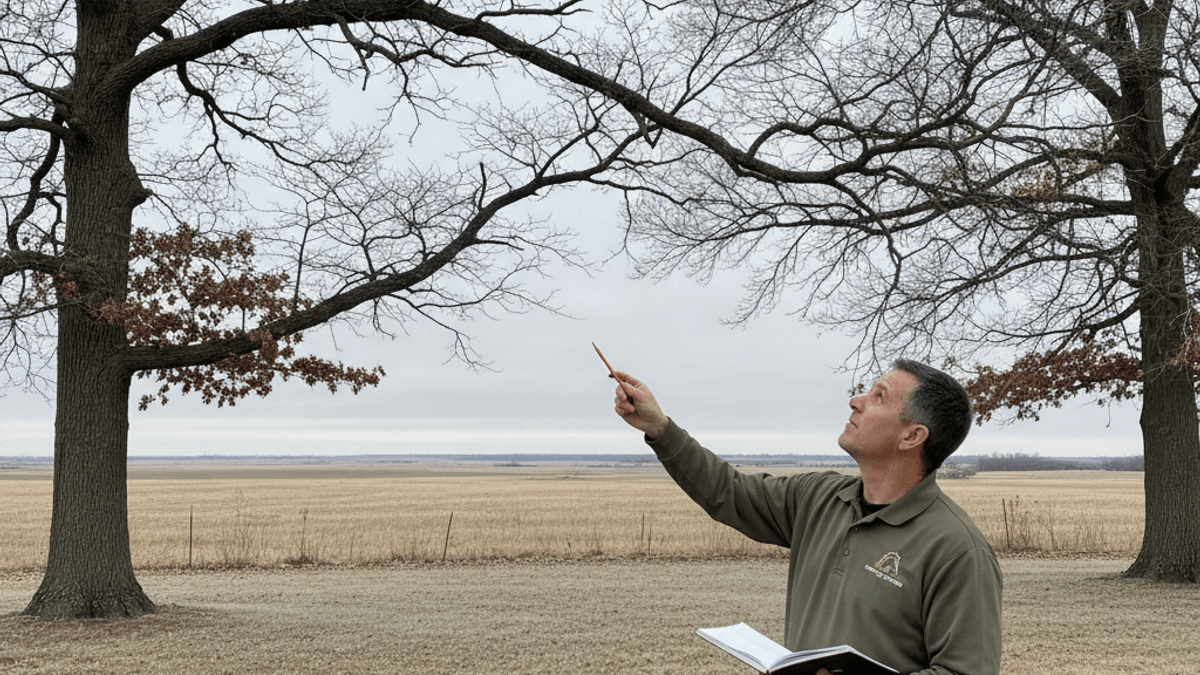
Pre-ice storm tree check for Topeka homes
A ground-level pre-ice storm tree check for damaged branches, unstable trees, nearby structures, and electrical hazards.
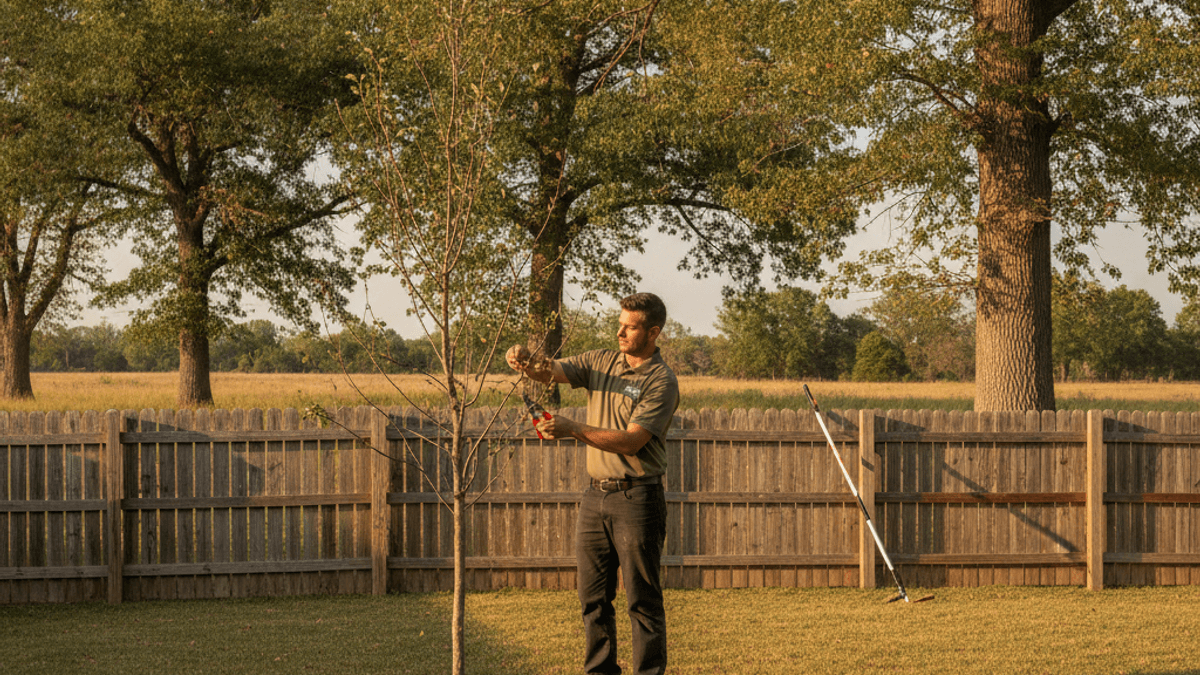
Safe DIY pruning for Topeka homeowners
Safe DIY pruning guidance for ground-level work, seasonal timing, damaged branches, oak trees, and electrical hazards.
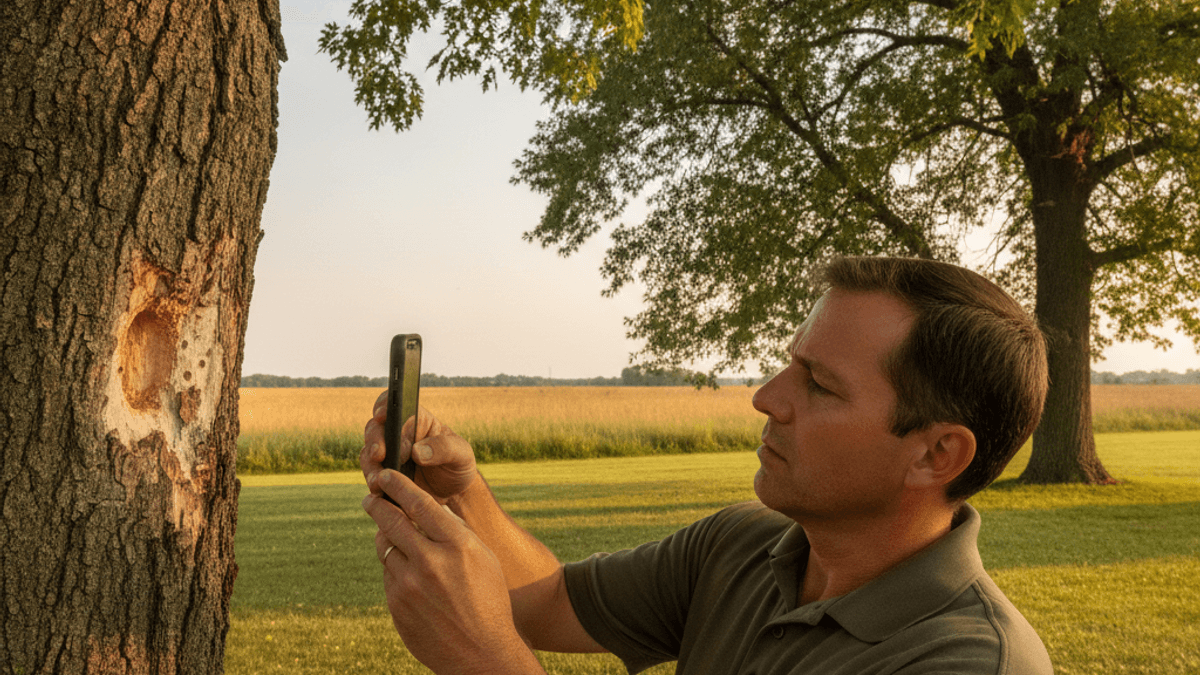
Possible emerald ash borer signs on an ash tree
Possible emerald ash borer signs to document before requesting professional identification and assessment of an ash tree.