Pre-ice storm tree check for Topeka homes
A ground-level pre-ice storm tree check for damaged branches, unstable trees, nearby structures, and electrical hazards.
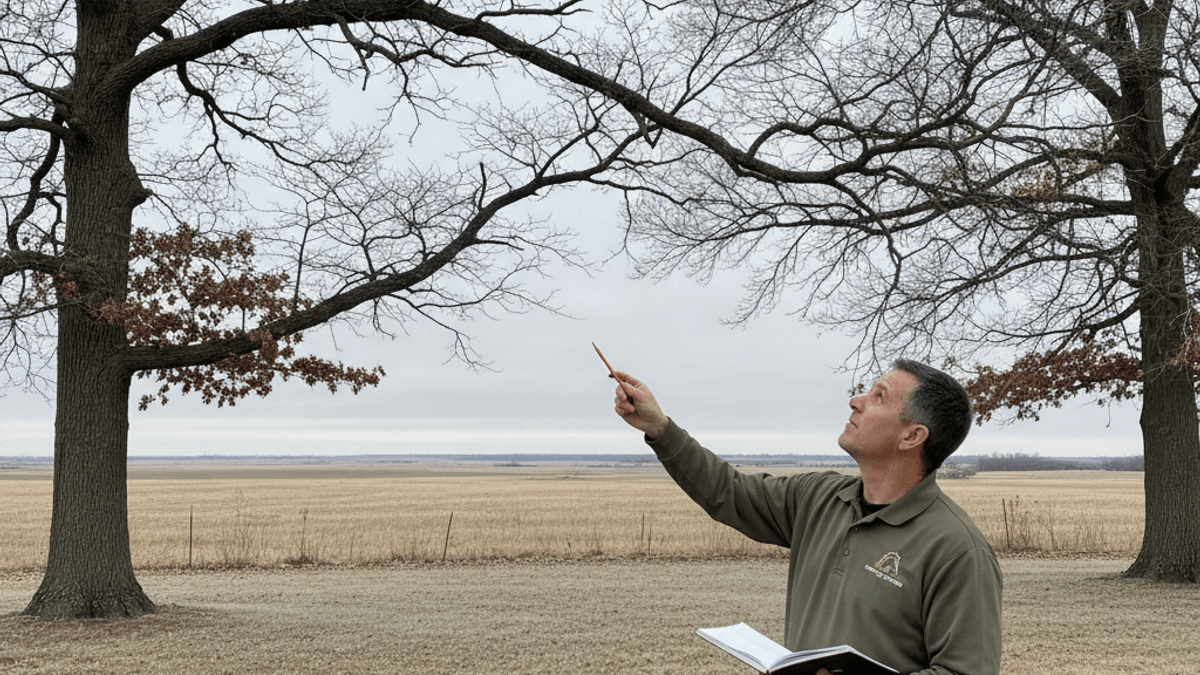
How do you start a pre-ice storm tree check?
A pre-ice storm tree check starts with a careful inspection from the ground. Look for broken or hanging branches, visible trunk damage, and trees that appear unstable. Notice what could be struck if something falls, including the house, driveway, vehicles, fences, and play areas. These observations identify concerns, but they do not predict whether a tree will fail.
Which warning signs need professional inspection?
Pay attention to recent damage, separated limbs, cracked trunks, hanging branches, and changes around the tree's base. Similar signs can have different causes, so avoid deciding that a tree is safe or unsafe from one feature alone. Ask a tree-service provider to inspect the tree's condition, surrounding obstacles, access, and the result you want.
When should you stay away and call for help?
Stay clear of downed power lines, hanging branches, and unstable damaged trees. Contact the utility about electrical hazards. Do not climb a damaged tree or cut a branch under tension. Dangerous storm damage needs professional assessment, and severe damage may make removal the appropriate option. Request an estimate before the storm when concerns are visible and conditions are safe.
Rather have a pro handle it?
Request an estimate from an independent insured tree-service provider serving Greater Topeka.
Keep reading.
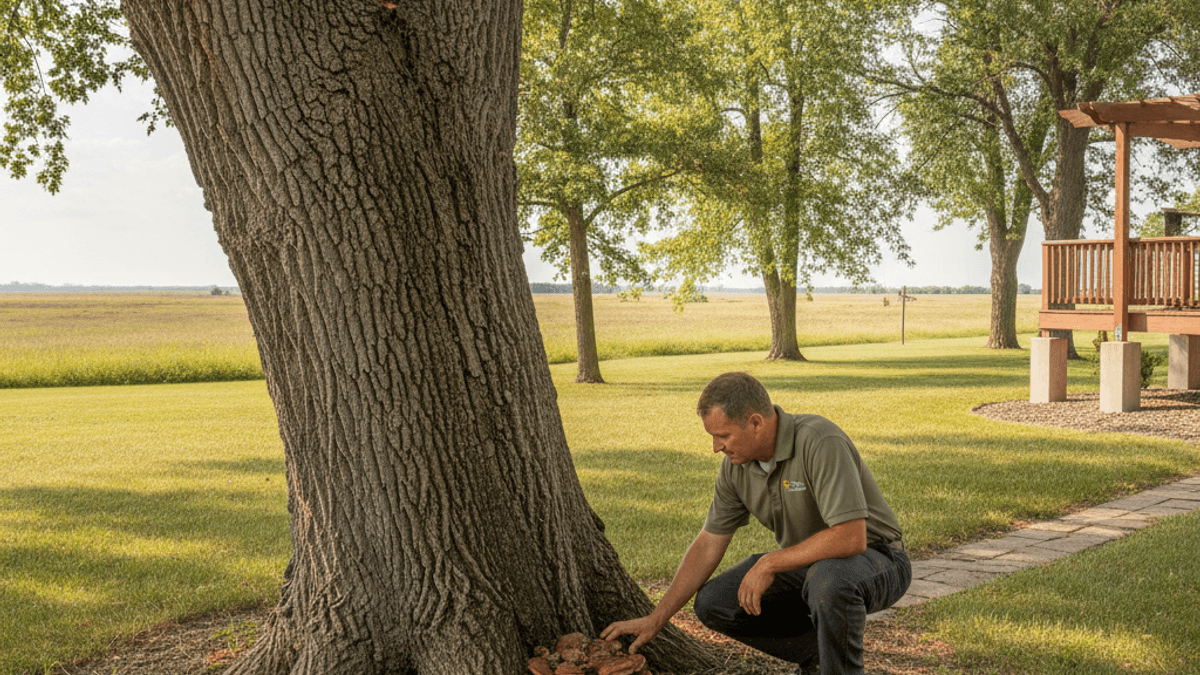
Recognizing a potential tree hazard in Topeka
Plain-English guidance for recognizing potential tree hazards without diagnosing the cause from one visible sign.
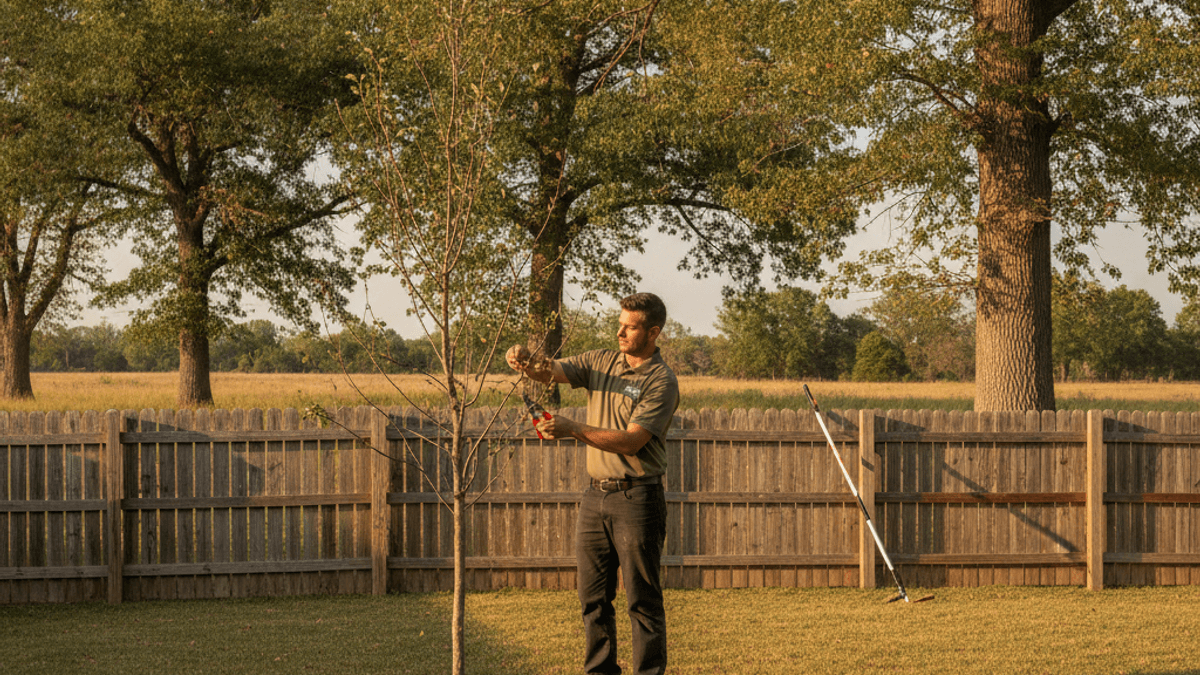
Safe DIY pruning for Topeka homeowners
Safe DIY pruning guidance for ground-level work, seasonal timing, damaged branches, oak trees, and electrical hazards.
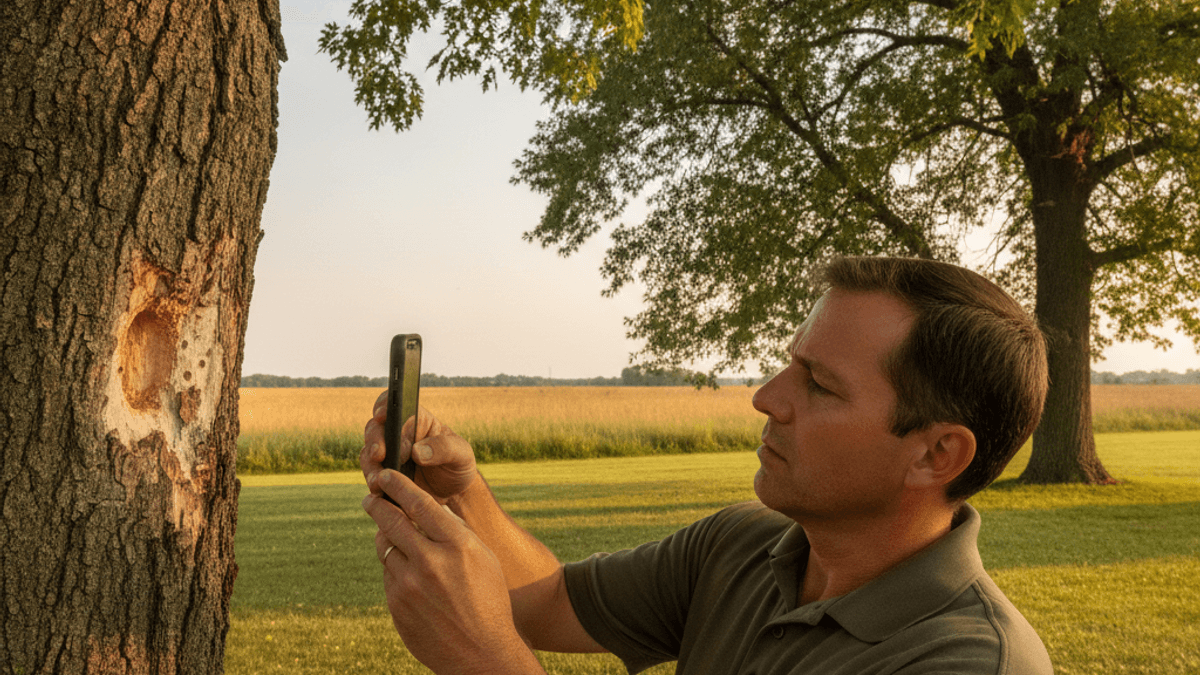
Possible emerald ash borer signs on an ash tree
Possible emerald ash borer signs to document before requesting professional identification and assessment of an ash tree.